
Chemical Peel in Islamabad
A Chemical Peel is a skin-resurfacing treatment in which a controlled chemical solution is applied to the skin to remove damaged surface layers and stimulate renewal. Depending on the formulation and depth, chemical peels may improve acne, post-acne pigmentation, uneven skin tone, sun damage, rough texture, fine lines and selected superficial scars.
Chemical peels range from light or superficial peels with relatively little downtime to medium and deep peels that penetrate further into the skin and require substantially more recovery. The appropriate peel should be selected according to the patient's skin tone, diagnosis, treatment area and risk of pigmentation or scarring rather than simply choosing the strongest available acid.
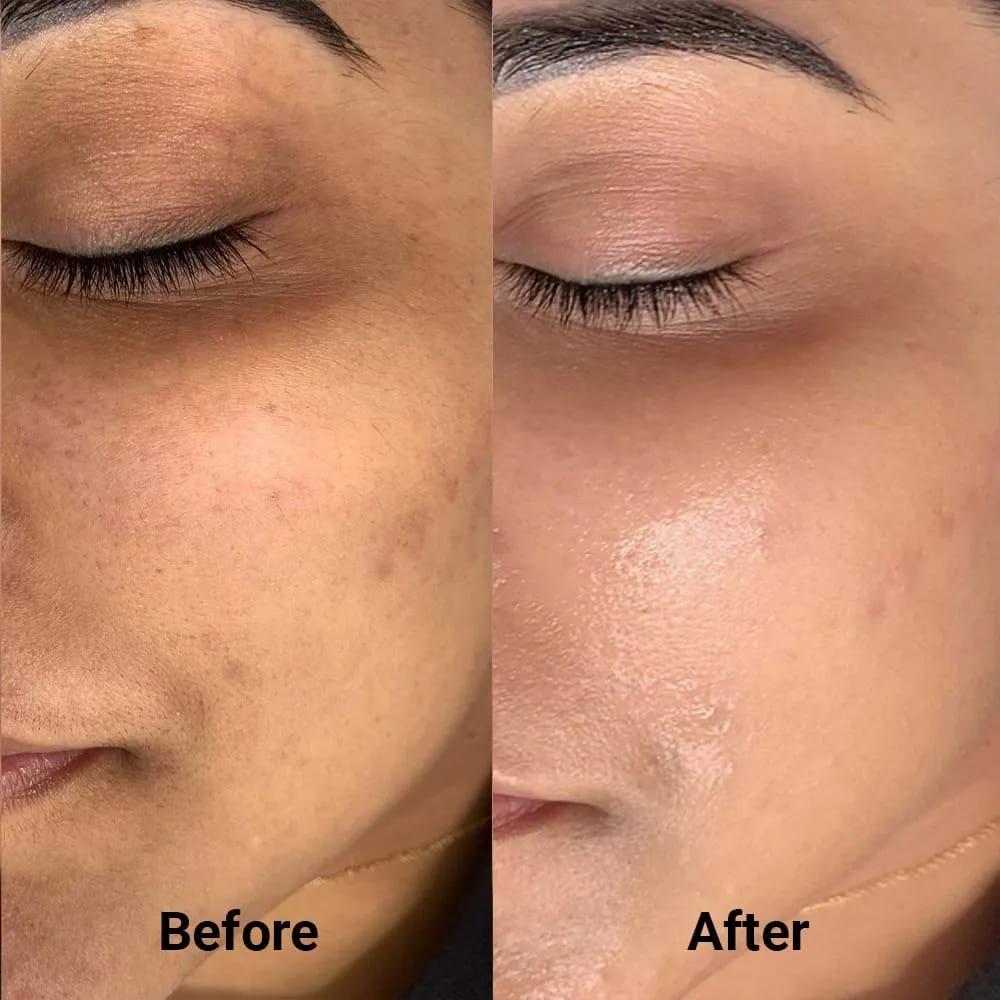
What is Chemical Peel?
A Chemical Peel, also called chemexfoliation, uses a controlled chemical solution to remove selected layers of damaged skin.
As the treated skin exfoliates and heals, it may become:
- Smoother
- Brighter
- More even in colour
- Less rough
- Less visibly sun damaged
Different chemical agents penetrate to different depths.
Common peeling agents can include:
- Glycolic acid
- Salicylic acid
- Lactic acid
- Mandelic acid
- Jessner's solution
- Trichloroacetic acid (TCA)
- Phenol for selected deep peels
The concentration of an acid alone does not determine peel depth.
Other important factors include:
- Type of acid
- pH
- Number of layers applied
- Application time
- Skin preparation
- Treatment technique
- Skin thickness
- Treatment area
For this reason, two products containing the same acid may produce very different effects.
The American Academy of Dermatology lists chemical peels as treatments for concerns including acne, age spots, uneven pigmentation, dullness, fine lines, freckles, melasma, rough skin and sun damage.
What Is a Chemical Peel Used For?
Chemical Peels may be considered for:
- Dull-looking skin
- Rough skin texture
- Blackheads and selected acne
- Post-acne dark marks
- Post-inflammatory hyperpigmentation
- Uneven skin tone
- Sun damage
- Age spots
- Selected freckles
- Melasma in appropriately selected patients
- Fine superficial lines
- Selected superficial acne scars
- General skin rejuvenation
The appropriate peel depends on the concern.
A salicylic-acid peel used for oily acne-prone skin, for example, is not automatically equivalent to a TCA peel used for more substantial resurfacing.
Chemical Peels should therefore be prescribed according to the skin problem and desired depth, rather than using one standard peel on every patient.
What concerns can it address?
Acne
Selected superficial chemical peels may help patients with:
- Blackheads
- Whiteheads
- Mild inflammatory acne
- Oily skin
- Congested pores
Salicylic acid is commonly used in acne-prone skin because it can penetrate oily follicular environments.
Chemical peeling should not replace appropriate medical treatment for:
- Severe inflammatory acne
- Nodular acne
- Cystic acne
- Acne causing significant scarring
Post-Acne Pigmentation
Flat dark marks remaining after acne may represent post-inflammatory hyperpigmentation rather than permanent scars.
Selected superficial peels can gradually improve this excess surface pigmentation.
Active acne should also be controlled so that new marks do not continue developing.
Uneven Skin Tone
Chemical exfoliation may improve selected superficial pigment irregularities and create a more even-looking complexion.
Melasma
Chemical peels may be used as part of a broader melasma-management programme.
However, melasma is chronic and recurrence-prone.
Aggressive peeling can trigger inflammation and worsen pigmentation, especially in darker skin tones.
Sun and visible-light protection remain fundamental to treatment.
Fine Lines
Medium or appropriately selected superficial peels may soften certain fine lines.
Chemical Peels do not reliably correct:
- Deep expression lines
- Major facial volume loss
- Significant loose skin
The American Society of Plastic Surgeons notes that peels can improve selected fine lines but cannot significantly tighten sagging skin or remove deep facial lines.
Sun Damage and Age Spots
Chemical Peels can improve selected areas of superficial photodamage and pigmentation.
Continued sun exposure, however, can produce additional pigmentation after treatment.
Rough Texture
Removal of damaged superficial skin cells can create a smoother skin surface.
Deeper textural problems may require:
- Microneedling
- RF microneedling
- Laser resurfacing
- Combination treatment
Types of Chemical Peel
Chemical Peels are generally classified according to how deeply they penetrate.
Superficial Chemical Peel
A superficial or light peel primarily affects the epidermis.
Common agents may include selected concentrations of:
- Glycolic acid
- Salicylic acid
- Lactic acid
- Mandelic acid
- Other alpha- or beta-hydroxy acids
Superficial peels may be considered for:
- Mild acne
- Surface congestion
- Dullness
- Mild pigmentation
- Fine superficial texture
- General skin maintenance
Improvement is usually modest after one treatment.
The AAD notes that approximately 3 to 5 light peels may be required to achieve the desired result in some patients.
Typical recovery
Temporary:
- Redness
- Dryness
- Flaking
- Mild peeling
- Sensitivity
may occur.
Mayo Clinic gives a broad healing period of approximately 1 to 7 days after a light peel.
Medium Chemical Peel
A medium peel penetrates through the epidermis and into portions of the upper dermis.
Common formulations can include:
- TCA
- Jessner's solution
- Glycolic-acid combinations
Medium peels may provide greater improvement for selected:
- Pigmentation
- Sun damage
- Fine-to-moderate wrinkles
- Selected acne scars
- More significant textural concerns
The trade-off is greater downtime and increased risk.
ASPS notes that medium peels can treat acne scars, deeper wrinkles and uneven skin colour.
Typical recovery
The skin may become:
- Red
- Swollen
- Tight
- Darker temporarily
- Crusted
- Peeling
Mayo Clinic reports approximately 7 to 14 days for treated skin to heal after many medium peels, although redness may persist considerably longer.
Deep Chemical Peel
Deep Chemical Peels create considerably more extensive skin injury.
Phenol is a traditional deep-peel agent.
Deep peels may be used for selected patients with:
- Significant photoageing
- Deeper wrinkles
- More pronounced textural damage
They require substantially more medical supervision and recovery.
Phenol can have systemic effects involving:
- Heart
- Kidneys
- Liver
and deep treatment can produce substantial and potentially permanent skin-colour changes.
Deep Chemical Peels are therefore fundamentally different from routine superficial clinic peels.
They should not be treated as a simple facial treatment.
Potential benefits
Depending on depth and diagnosis, potential benefits may include:
- Brighter-looking skin
- Smoother texture
- Reduction in superficial pigmentation
- Improvement in selected acne
- Reduction of post-acne dark marks
- Improvement in selected fine lines
- Reduction in superficial sun damage
- More even-looking skin tone
- Improvement in selected superficial scars
- Customisable treatment intensity
Chemical Peels can also be combined with an appropriate long-term skincare programme.
However, greater peel depth generally means:
- Greater correction
- Greater downtime
- Greater risk
A stronger peel is therefore not automatically a better peel.
Limitations and realistic expectations
Chemical Peels cannot guarantee:
- Permanent pore removal
- Complete acne-scar removal
- Permanent pigmentation removal
- Permanent melasma cure
- Elimination of deep wrinkles
- Surgical skin tightening
- Zero downtime
- Zero risk of pigmentation
- Identical results in every skin tone
Results depend on:
- Peel depth
- Chemical agent
- Concentration and formulation
- Skin tone
- Diagnosis
- Sun exposure
- Previous treatments
- Healing response
- Practitioner technique
- Number of sessions
Most Chemical Peel results are not permanent because the skin continues ageing and can develop further sun damage.
Patients should be cautious about claims such as:
- “Permanent glass skin”
- “One peel removes all pigmentation”
- “100% acne-scar removal”
- “No risk for darker skin”
- “Deep peel with zero downtime”
- “Chemical Peel permanently whitens skin”
These claims are not realistic.
Chemical Peels and Darker Skin Tones
Chemical Peels can be performed on darker skin, but appropriate peel selection and expertise are particularly important.
Patients with medium-to-dark skin can be more susceptible to:
- Post-inflammatory hyperpigmentation
- Hypopigmentation
- Prolonged uneven colour
- Pigmentation following excessive irritation
The AAD specifically states that people with skin of colour can undergo chemical peeling safely when treated by someone experienced with darker skin, but inappropriate treatment can lead to permanent pigment problems.
This is especially relevant when treating patients prone to:
- Melasma
- Post-acne pigmentation
- Previous dark marks after skin injury
A conservative superficial treatment may sometimes be more appropriate than aggressive resurfacing.
Who may be suitable?
Chemical Peel treatment may be considered for adults with:
- Dull skin
- Mild acne
- Blackheads
- Post-acne pigmentation
- Uneven skin tone
- Sun damage
- Selected age spots
- Fine lines
- Rough texture
- Selected superficial scars
- Realistic expectations
Before treatment, an assessment should consider:
- Skin colour
- Fitzpatrick skin type
- Current acne
- Pigmentation
- Melasma
- Skin sensitivity
- Current skincare
- Prescription medicines
- Previous peels
- Laser treatments
- History of abnormal scarring
- Cold sores
- Sun exposure
The depth of peel should be selected according to this assessment.
Who may not be suitable?
Certain Chemical Peels may need to be postponed or avoided in patients with:
- Active skin infection
- Open wounds
- Significant active dermatitis
- Severe inflammatory skin disease
- Recent significant tanning
- Sunburn
- Poor wound healing
- History of significant abnormal scarring
- Certain highly sensitive skin conditions
Additional caution may be required for:
- Keloid tendency
- Recurrent cold sores
- Pregnancy
- Certain medications
- Previous isotretinoin use
- Previous facial surgery or resurfacing
- Significant pigment abnormalities
Mayo Clinic identifies factors including pregnancy, a history of keloids, frequent cold sores and recent isotretinoin use as issues requiring careful consideration before certain peels.
Pregnancy also affects which chemical agents and active skincare ingredients are appropriate.
How to prepare
Before a Chemical Peel, tell your clinician about:
- Prescription medication
- Isotretinoin history
- Retinoids
- Hydroquinone
- Acne treatment
- Exfoliating acids
- Allergies
- Cold sores
- Previous chemical peels
- Previous laser treatment
- Microneedling
- History of pigmentation
- Keloid formation
- Pregnancy or breastfeeding
- Recent tanning
Pre-peel skincare
Some patients may require a specific skincare routine before treatment.
The AAD notes that a 2- to 4-week pre-peel skincare plan may sometimes be recommended to improve results and reduce side effects.
This may involve selected:
- Sunscreen
- Pigmentation-control products
- Retinoids
- Other clinician-directed products
depending on the peel.
Do not begin or stop prescription treatments without appropriate medical advice.
Avoid tanning
Recent tanning can increase the risk of uneven pigmentation following treatment.
Daily broad-spectrum sun protection is important both before and after peeling.
Cold-sore prevention
Patients with recurrent herpes simplex may sometimes require preventive antiviral medication before medium or deeper facial peels because skin injury can reactivate the virus.
How the procedure works
1. Skin assessment
The clinician determines:
- Skin type
- Main concern
- Appropriate peel depth
- Pigmentation risk
- Treatment area
2. Cleansing and degreasing
Makeup, oil and surface debris are removed.
Some peel protocols require additional degreasing to allow even penetration.
3. Eye and sensitive-area protection
Sensitive areas around:
- Eyes
- Lips
- Nose
may be protected according to the peel protocol.
4. Chemical application
The selected chemical solution is applied carefully to the skin.
Patients may feel:
- Tingling
- Warmth
- Stinging
- Burning
depending on treatment intensity.
5. Controlled exposure
The practitioner monitors:
- Skin reaction
- Treatment time
- Colour change
- Frosting where relevant
- Patient discomfort
to determine the treatment endpoint.
6. Neutralisation or completion
Some acids require neutralisation.
Others are self-neutralising or are removed according to their specific protocol.
7. Post-peel skincare
Depending on peel depth, the clinician may apply:
- Moisturiser
- Protective ointment
- Soothing products
- Sunscreen
8. Aftercare instructions
The patient receives specific instructions regarding:
- Cleansing
- Moisturising
- Peeling skin
- Makeup
- Sun exposure
- Active skincare
Results and treatment timeline
Results depend strongly on peel depth.
After a Superficial Peel
The skin may initially appear:
- Pink
- Dry
- Tight
- Slightly flaky
Peeling can occur over the following days.
Mayo Clinic reports that light-peel healing generally takes approximately 1 to 7 days.
Repeated treatments may gradually improve:
- Texture
- Brightness
- Superficial pigmentation
- Mild acne
After a Medium Peel
The skin generally becomes:
- Red
- Swollen
- Tight
- Darker before peeling
- Crusted or flaky
New surface skin typically develops over approximately 7 to 14 days, although redness can persist for considerably longer.
After a Deep Peel
Recovery is significantly more substantial.
New skin may develop over approximately two weeks, but redness can last for months.
Deep phenol peels are generally performed as a single major treatment rather than repeatedly like superficial peels.
Risks and side effects
All Chemical Peels carry some degree of risk.
Potential effects include:
- Redness
- Burning
- Stinging
- Dryness
- Peeling
- Swelling
- Crusting
- Temporary sensitivity
More significant complications can include:
Hyperpigmentation
The skin may become darker following treatment.
This is an important concern in darker skin tones and patients prone to post-inflammatory pigmentation.
Hypopigmentation
The treated area may become lighter.
This is especially associated with deeper peels and can occasionally be persistent.
Chemical Burns
Excessive acid concentration, prolonged exposure or inappropriate treatment can produce severe chemical injury.
In 2024, the FDA warned consumers against using high-concentration at-home chemical peels without professional supervision because reported injuries included severe chemical burns, pain, swelling, infection, skin-colour changes and disfiguring scars.
Infection
Chemical Peels can occasionally lead to:
- Bacterial infection
- Fungal infection
- Herpes simplex reactivation
Scarring
Scarring is uncommon when appropriately performed but is possible, particularly following:
- Excessive injury
- Infection
- Picking
- Abnormal healing
Persistent redness
Medium and deep peels can produce redness lasting for weeks or months.
Systemic risks of deep phenol peels
Phenol can affect:
- Heart rhythm
- Kidneys
- Liver
which is why deep phenol peeling requires appropriate medical monitoring and should not be treated as a routine beauty-salon procedure.
At-Home Chemical Peel Safety
High-strength Chemical Peels should not be attempted at home without appropriate professional supervision.
The FDA specifically warned against unsupervised use of potent products containing high concentrations of:
- TCA
- Glycolic acid
- Salicylic acid
- Lactic acid
because concentration, application time and number of layers can cause unpredictable penetration and severe chemical burns.
The FDA also stated that it had not approved the chemical peel products involved in its warning.
Consumers should therefore be cautious with products marketed online as:
- “TCA 100%”
- “Professional strength”
- “Medical-grade home peel”
- “Deep peel at home”
High concentration does not mean better results.
It can mean deeper uncontrolled tissue injury.
Recovery and aftercare
Aftercare depends on peel depth.
General advice may include:
- Cleanse gently.
- Apply recommended moisturiser or ointment.
- Do not pick peeling skin.
- Do not pull off flakes or crusts.
- Avoid aggressive scrubs.
- Avoid strong exfoliating acids temporarily.
- Avoid retinoids until instructed.
- Avoid unnecessary heat.
- Avoid tanning.
- Use broad-spectrum sunscreen daily.
- Follow instructions regarding makeup.
The AAD notes that scratching, picking scabs, inadequate sun protection or using makeup before the skin has healed can substantially increase the risk of infection and scarring.
Sun protection
Freshly peeled skin is particularly vulnerable to ultraviolet exposure.
Strict sunscreen use is important because sun exposure can contribute to:
- Hyperpigmentation
- Uneven colour
- Recurrence of pigmentation
- Additional photoageing
Contact the clinic if you develop:
- Severe or increasing pain
- Extensive blistering
- Significant unexpected swelling
- Pus or discharge
- Fever
- Spreading redness
- Delayed healing
- Severe darkening
- Persistent whitening
- Another unexpected reaction
Alternatives and comparisons
Alternatives and comparisons
The most appropriate alternative depends on the concern.
Options may include:
- Medical skincare
- Hydrafacial
- Dermaplaning
- Microdermabrasion
- Microneedling
- RF microneedling
- Laser resurfacing
- Pigment-targeting laser treatment
- Acne medication
- Combination treatment
Chemical Peel vs Hydrafacial
Chemical Peel uses acids or other chemical solutions to create controlled exfoliation.
Hydrafacial combines superficial cleansing, exfoliation, suction-assisted extraction and hydration.
A superficial Hydrafacial usually involves less peeling and downtime, while Chemical Peels can provide stronger exfoliation depending on depth.
Chemical Peel vs Dermaplaning
Dermaplaning mechanically removes superficial dead cells and fine vellus hair with a blade.
A Chemical Peel uses a chemical agent to exfoliate.
Dermaplaning does not normally create the same chemical resurfacing effect as medium-depth peeling.
Chemical Peel vs Microneedling
Microneedling creates controlled microscopic needle injuries to stimulate collagen remodelling.
Chemical Peels primarily exfoliate through controlled chemical injury.
Microneedling may be more useful for selected:
- Depressed acne scars
- Dermal textural concerns
while superficial peels may be more suitable for:
- Congestion
- Superficial pigmentation
- Mild acne
- Surface texture
Chemical Peel vs Laser Skin Resurfacing
Laser resurfacing uses controlled light energy.
Chemical Peeling uses chemical agents.
Stronger fractional or ablative lasers may provide greater collagen remodelling for acne scars and substantial photoageing but usually involve greater cost, equipment requirements and specific laser-related risks.
Both procedures can cause pigmentation changes and scarring when performed improperly.
Chemical Peel vs Skin Whitening Treatment
Chemical Peels may form one part of a pigmentation-treatment programme.
They should not be marketed as permanently whitening a person's natural skin colour.
The appropriate objective is generally reduction of excess or uneven pigmentation.
What affects the cost?
The cost of a Chemical Peel depends on:
- Type of peel
- Peel depth
- Chemical agent
- Concentration and formulation
- Treatment area
- Number of sessions
- Acne or pigmentation treatment requirements
- Pre-peel skincare
- Post-peel care
- Practitioner expertise
- Follow-up requirements
A mild glycolic or salicylic peel requires a very different level of treatment from a medium-depth TCA peel.
Deep phenol peeling is an even more specialised medical procedure with substantially different:
- Monitoring
- Recovery
- Risk
- Cost
Patients should therefore ask what exact chemical and peel depth are being offered rather than comparing prices based only on the words “Chemical Peel.”
Patient experiences
Reviews describe individual experiences and do not predict another patient's result.
I had a wonderful experience consulting with Dr. Samaviya Ejaz. She is an incredibly impressive and professional dermatologist. Her clinic is beautiful and has a calming atmosphere.
Umar Shah
Read on GoogleI had my hair fall consultation with Dr Samavia. She thoroughly explained the treatment. After PRF sessions my hair fall stopped and density improved. Highly recommend.
Moneeb Mumtaz
Read on GoogleI have had a few treatments at this clinic and I am happy with the outcomes. Dr. Samavia and her team are kind, professional, and trustworthy.
Sheikh Yousuf Kareem
Read on GoogleVisit Dr Samavia at Facetime Clinic
Use the verified Google profile for clinic directions, business details and linked patient reviews.
Clinical references
- Chemical Peels: OverviewAmerican Academy of Dermatology · accessed 30 August 2026
- Chemical Peels: FAQsAmerican Academy of Dermatology · accessed 30 August 2026
- Chemical PeelMayo Clinic · accessed 30 August 2026
- Chemical Peel: Risks and SafetyAmerican Society of Plastic Surgeons · accessed 30 August 2026
- Chemical Peel Procedure StepsAmerican Society of Plastic Surgeons · accessed 30 August 2026
- Medium Chemical PeelAmerican Society of Plastic Surgeons
- FDA Warns Against Purchasing or Using Chemical Peel Skin Products Without Professional SupervisionU.S. Food and Drug Administration · accessed 30 August 2026
Chemical Peel FAQs
What does a Chemical Peel do?
A Chemical Peel applies a controlled chemical solution to remove selected damaged skin layers. Depending on the depth and formulation, it may improve acne, post-acne pigmentation, sun damage, uneven skin tone, rough texture and selected fine lines. Stronger peels penetrate deeper but also involve greater downtime and risk.
How many Chemical Peel sessions do I need?
The number depends on peel depth and treatment goal. The AAD notes that patients receiving light or “lunchtime” peels may need approximately 3 to 5 treatments to achieve their desired result. Medium peels may be repeated selectively, while a person generally receives only one deep peel.
How long does a Chemical Peel take to heal?
Healing varies greatly by depth. Mayo Clinic gives a broad range of approximately 1 to 7 days for light peels and 7 to 14 days for medium peels. Deep peels can require around two weeks for new surface skin to form, while redness may continue for several months.
Is Chemical Peel good for acne and acne marks?
Selected superficial peels can help blackheads, mild acne and post-inflammatory dark marks. However, moderate-to-severe inflammatory, cystic or scarring acne generally requires appropriate medical acne treatment. Deep acne scars also usually need treatments such as microneedling, subcision or laser resurfacing rather than relying on a superficial peel alone.
Is Chemical Peel safe for darker skin?
Chemical Peels can be performed in darker skin, but treatment must be chosen carefully because excessive inflammation can cause hyperpigmentation or, with deeper treatment, hypopigmentation. The AAD advises patients with skin of colour to choose a practitioner experienced in treating darker skin because inappropriate peeling can cause persistent pigment changes.
Other Body & Skin Procedures guides
Book a consultation in Islamabad to review suitability, alternatives, expected recovery and individual risks.