
Skin Lightening Treatment Vitamin Infusion in Islamabad
Skin Lightening Treatment Vitamin Infusion is a term used for intravenous infusions marketed to support a brighter or more even-looking complexion. These infusions may contain ingredients such as vitamins, antioxidants and, in some protocols, glutathione.
Evidence for cosmetic skin lightening from intravenous vitamin or glutathione infusions remains limited. There is no universally accepted IV formulation, dosage or treatment schedule for cosmetic skin lightening, and results cannot be guaranteed. A medical assessment is important before considering intravenous treatment because ingredients, doses, health conditions and potential risks vary between patients.
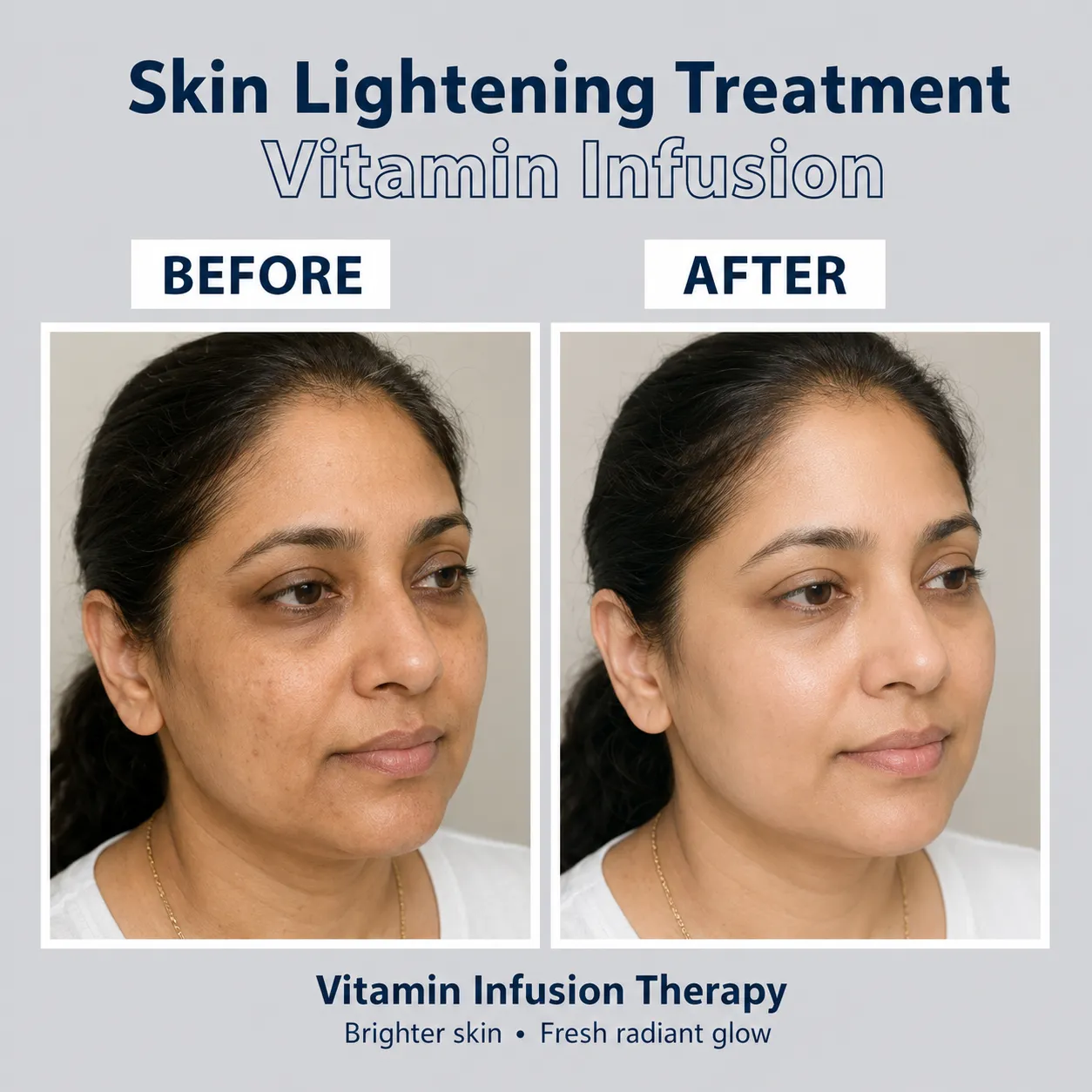
What is Skin Lightening Treatment Vitamin Infusion?
Skin Lightening Vitamin Infusion refers to an intravenous treatment in which selected vitamins or antioxidant compounds are administered directly into the bloodstream.
Formulations vary considerably between clinics. Some treatments marketed for skin brightening include vitamin C, while others may contain glutathione or combinations of antioxidants and micronutrients.
Glutathione is a naturally occurring antioxidant involved in cellular antioxidant defence and several metabolic processes. It has also been investigated for possible effects on melanin production, which is why it has become widely marketed for skin lightening.
However, the route of administration is important. While some studies have investigated oral and topical glutathione, scientific evidence supporting intravenous glutathione specifically for cosmetic skin lightening remains limited, and long-term safety has not been adequately established.
Therefore, a vitamin infusion should not be presented as a guaranteed method of whitening the skin or permanently changing a person's natural skin colour.
What Is Skin Lightening Treatment Vitamin Infusion Used For?
These infusions are commonly marketed to people seeking improvement in the appearance of:
- Dull-looking skin
- Uneven-looking skin tone
- General skin brightness
- Tired-looking complexion
- Certain pigmentation concerns
However, pigmentation has many possible causes.
Melasma, post-inflammatory hyperpigmentation, sun damage, medication-related pigmentation and other pigment disorders may require different treatments. A skin assessment should therefore be performed before deciding whether an infusion or another dermatological treatment is appropriate.
Intravenous vitamin treatment should not replace investigation or treatment of an underlying dermatological or medical condition.
A Personalized Approach to Skin Lightening Vitamin Infusion
Uneven pigmentation, dull-looking skin and concerns about skin brightness can have many different causes, so Skin Lightening Vitamin Infusion should not be recommended as a standard whitening treatment for every patient. Intravenous formulations can vary substantially in their ingredients, concentrations and intended purpose, and current evidence for predictable cosmetic skin lightening remains limited.
Before recommending an infusion, Dr. Samavia assesses each patient individually, considering the patient's skin concerns, pigmentation pattern, medical history, current medications and supplements, allergies, previous IV reactions, kidney and liver health, pregnancy or breastfeeding status and any other factors that may affect treatment safety.
The first priority is to determine whether the patient's concern represents a general cosmetic desire for brighter-looking skin or a specific pigmentation condition such as melasma, post-inflammatory hyperpigmentation, sun-related pigmentation or another dermatological problem. Treating the underlying cause may be more appropriate than proceeding directly with an intravenous infusion.
If Vitamin Infusion is considered appropriate, Dr. Samavia develops an individual treatment plan based on the patient's clinical findings rather than relying on a fixed whitening package or guaranteed number of sessions.
The exact ingredients, doses and purpose of the proposed infusion are reviewed with the patient before treatment. Depending on the formulation, this may include vitamins, antioxidants or other medically selected compounds. If glutathione is being considered, its use, limitations and current evidence are discussed specifically rather than assuming that all vitamin infusions provide the same effect.
Depending on the diagnosis, the broader treatment plan may also include daily sun protection, clinician-directed pigmentation treatment, medical-grade skincare, topical brightening agents, chemical peels, microneedling, laser or light-based treatment, or management of an underlying skin condition.
Patients should understand that intravenous vitamin or glutathione treatment cannot guarantee permanent whitening, a predetermined number of lighter skin shades or permanent reduction in melanin production. Natural skin colour is largely determined by genetics and melanin biology, and individual cosmetic responses to infusion therapy vary.
Monitoring Treatment Response and Safety
Because there is no universally established treatment schedule or reliable timeline for cosmetic skin lightening with IV vitamin infusions, treatment response should be evaluated carefully rather than promising results after a specific number of sessions.
Where appropriate, baseline clinical photographs and assessment of the patient's pigmentation pattern and overall skin appearance may be used to monitor changes during follow-up.
Dr. Samavia also reviews treatment tolerance and any adverse reactions. Monitoring is particularly important because intravenous treatment carries risks related not only to the IV cannula but also to the specific ingredients, doses and formulation being administered.
Follow-up may help determine whether further treatment is appropriate, whether the infusion plan should be modified or whether another evidence-based pigmentation treatment would be more suitable.
Patients receive personalised guidance regarding hydration, skincare, sun protection, medications and symptoms that require medical attention following treatment.
Because evidence for cosmetic skin lightening from intravenous vitamin or glutathione infusions remains limited, treatment is approached with realistic expectations and without guaranteed whitening claims or predetermined long-term results.
If you are considering Skin Lightening Treatment Vitamin Infusion in Islamabad, you can book a consultation with Dr. Samavia for an individual skin assessment, medical review and personalised treatment plan.
What concerns can it address?
Patients commonly enquire about vitamin infusions for general skin brightness and uneven pigmentation.
Evidence supporting significant or predictable skin-lightening results from IV vitamin infusions is limited. If pigmentation is caused by melasma, acne, inflammation, ultraviolet exposure or another skin condition, treating the underlying cause may be considerably more important than receiving an infusion.
A clinician should distinguish between a general cosmetic desire for brighter-looking skin and a diagnosable pigmentation disorder before recommending treatment.
Potential benefits
-
Depending on the formulation and individual patient, potential considerations may include:
- Intravenous delivery of specifically prescribed nutrients.
- Correction of a documented nutritional deficiency when medically indicated.
- Administration under medical supervision rather than unsupervised supplementation.
- Possible antioxidant activity from certain ingredients.
- Minimal interruption to normal daily activities for many patients.
Claims that IV vitamin or glutathione infusions reliably whiten the skin, permanently reduce melanin or produce a predetermined number of shades of lightening are not supported by strong clinical evidence.
Limitations and realistic expectations
Skin Lightening Vitamin Infusion should not be viewed as a permanent skin-whitening treatment.
Natural skin colour is primarily determined by genetics and melanin production. A vitamin infusion cannot safely guarantee conversion of a person's natural complexion to a predetermined lighter shade.
Research investigating glutathione for pigmentation has produced mixed results. Evidence for oral and topical preparations is more extensive than evidence for intravenous administration, but even these results are variable.
For intravenous glutathione, evidence supporting cosmetic skin lightening is particularly limited, while important questions remain regarding appropriate dosing, treatment duration, long-term safety and maintenance.
Patients should also be cautious of claims such as:
- “Permanent whitening”
- “Guaranteed fair skin”
- “Several shades lighter after one session”
- “100% safe with no side effects”
- “Permanent reduction of melanin”
These claims cannot be reliably supported by current clinical evidence.
Who may be suitable?
Whether an IV infusion is appropriate depends on the ingredients being considered and the patient's medical history.
Before treatment, a clinician may evaluate:
- General health
- Reason for seeking treatment
- Current medications and supplements
- Previous reactions to IV treatment
- Kidney and liver health where relevant
- Pregnancy or breastfeeding status
- Allergies
- Existing skin conditions
- Nature and cause of pigmentation
- Nutritional deficiencies when suspected
A patient seeking treatment specifically for pigmentation may benefit from dermatological assessment before an infusion is considered.
Who may not be suitable?
Treatment may not be appropriate, or may require additional medical assessment, for patients with:
- Known allergy to an infusion ingredient
- Significant kidney disease
- Significant liver disease
- Certain heart conditions
- Fluid-balance problems
- Particular metabolic disorders
- Active serious illness
- Previous severe reaction to an IV infusion
- Pregnancy or breastfeeding without appropriate medical assessment
- Medications or medical conditions that could interact with infusion ingredients
Additional contraindications depend on the exact ingredients and doses being administered.
For example, high-dose vitamin C requires particular caution in patients with certain kidney conditions and glucose-6-phosphate dehydrogenase (G6PD) deficiency.
The complete infusion formula should therefore be reviewed before treatment rather than assuming that a product is safe simply because its ingredients are described as “vitamins” or “antioxidants.”
How to prepare
Before treatment, tell the clinician about:
- Prescription medicines
- Over-the-counter medicines
- Vitamins and supplements
- Allergies
- Kidney or liver problems
- Previous IV reactions
- Pregnancy or breastfeeding
- Recent illness
- Previous pigmentation treatments
- Any diagnosed medical conditions
The clinician should explain exactly what substances are included in the proposed infusion and why they are being administered.
Depending on the ingredients and medical history, laboratory testing may occasionally be appropriate.
Patients should not stop prescribed medicines before treatment unless advised by the clinician responsible for those medicines.
How the procedure works
- Consultation and skin assessment: The patient's concerns, pigmentation pattern and treatment expectations are reviewed.
- Medical screening: Medical history, medications, allergies and potential contraindications are assessed.
- Infusion selection: The clinician determines whether IV treatment is appropriate and identifies the proposed ingredients and doses.
- IV cannula placement: A small cannula is inserted into a suitable vein, usually in the arm or hand.
- Infusion: The prescribed solution is administered gradually while the patient is observed.
- Monitoring: The patient is monitored for discomfort, dizziness, allergic symptoms or other unexpected reactions.
- Aftercare: The IV cannula is removed and appropriate post-treatment instructions are provided.
The exact procedure and duration vary depending on the ingredients and clinical protocol.
Results and treatment timeline
There is no scientifically established timeline showing when a cosmetic skin-lightening effect should appear after an IV vitamin infusion.
Responses reported with glutathione have varied between studies, formulations and routes of administration.
If a patient has pigmentation caused by melasma, sun exposure, acne or another dermatological condition, improvement may depend substantially on treating that underlying condition and using appropriate sun protection.
Any perceived brightening effect should be assessed objectively rather than promising a specific number of shades of skin lightening.
Long-term or permanent cosmetic benefits from intravenous glutathione have not been established.
Risks and side effects
Intravenous treatment carries risks even when the ingredients are vitamins or antioxidants.
Possible effects associated with IV administration include:
- Pain during cannula insertion
- Bruising
- Redness
- Swelling
- Vein irritation
- Dizziness
- Nausea
- Headache
- Flushing
- Infection at the IV site
Less common but potentially serious complications can include:
- Allergic or hypersensitivity reactions
- Significant changes in blood pressure
- Infection
- Fluid or electrolyte disturbances
- Complications related to inappropriate dosing
- Complications related to contaminated or improperly compounded injectable products
Specific risks depend on the ingredients.
Glutathione injections require particular caution. Published reviews have raised concerns regarding the lack of robust evidence for IV glutathione as a skin-lightening treatment and the absence of adequate long-term safety information.
In August 2026, the U.S. FDA also reported adverse events associated with certain compounded IV glutathione preparations made using dietary-supplement-grade material, including fever, chills, dizziness, low blood pressure and sepsis-like reactions.
This reinforces the importance of medical supervision, appropriate injectable-grade products, sterile preparation and careful patient selection.
Recovery and aftercare
Most patients can resume normal light activities after an uncomplicated infusion.
A small amount of tenderness or bruising can occur where the IV cannula was inserted.
Follow the clinician's instructions regarding hydration, medications, supplements and additional skin treatments.
For pigmentation concerns, appropriate sun protection is particularly important because ultraviolet and visible-light exposure can worsen several pigmentary conditions.
Seek medical attention if you develop unexpected symptoms such as:
- Difficulty breathing
- Facial or throat swelling
- Severe dizziness
- Fainting
- Persistent vomiting
- Fever or chills
- Increasing redness or swelling around the IV site
- Severe pain
- Another significant or unusual reaction
Alternatives and comparisons
The most appropriate treatment for uneven pigmentation or a dull complexion depends on the underlying cause.
Alternatives may include:
- Daily broad-spectrum sunscreen
- Prescription or clinician-directed pigmentation treatments
- Topical vitamin C
- Azelaic acid
- Retinoid-based treatment where appropriate
- Chemical peels
- Microneedling in selected patients
- Laser or light-based pigmentation treatments
- Treatment specifically directed at melasma
- Management of acne and post-inflammatory pigmentation
- Oral or topical antioxidant formulations where clinically appropriate
- Observation and appropriate skincare
Vitamin Infusion vs topical skin-brightening treatment: Topical therapies act directly on the skin and several established pigmentation treatments have substantially more clinical evidence than IV vitamin infusions for cosmetic skin lightening.
Vitamin Infusion vs glutathione injection: These terms sometimes overlap in clinic marketing, but they are not necessarily the same treatment. A vitamin infusion may contain vitamin C or other micronutrients, whereas some “whitening drips” specifically contain glutathione. Patients should be told the exact ingredients before treatment.
The safest and most appropriate option should be selected according to the diagnosis rather than simply choosing the treatment marketed as producing the fastest lightening.
What affects the cost?
The cost of Skin Lightening Treatment Vitamin Infusion may depend on:
- Ingredients included in the infusion
- Prescribed quantities
- Number of medically appropriate sessions
- Clinical consultation
- Medical assessment or laboratory testing
- Product sourcing and preparation
- Monitoring during treatment
- Whether additional pigmentation treatments are included
A large package of repeated infusions should not be recommended solely on the basis of a promised skin-lightening result.
Treatment frequency should be determined according to the formulation, medical assessment and available evidence rather than a guaranteed cosmetic outcome.
Patient experiences
Reviews describe individual experiences and do not predict another patient's result.
I had a wonderful experience consulting with Dr. Samaviya Ejaz. She is an incredibly impressive and professional dermatologist. Her clinic is beautiful and has a calming atmosphere.
Umar Shah
Read on GoogleI had my hair fall consultation with Dr Samavia. She thoroughly explained the treatment. After PRF sessions my hair fall stopped and density improved. Highly recommend.
Moneeb Mumtaz
Read on GoogleI have had a few treatments at this clinic and I am happy with the outcomes. Dr. Samavia and her team are kind, professional, and trustworthy.
Sheikh Yousuf Kareem
Read on GoogleVisit Dr Samavia at Facetime Clinic
Use the verified Google profile for clinic directions, business details and linked patient reviews.
Clinical references
- Glutathione as a skin-lightening agent and in melasmaa systematic review — International Journal of Dermatology / PubMed · accessed 29 August 2026
- FDA reminds compounders not to use dietary supplement grade glutathione for injectablesU.S. Food and Drug Administration · accessed 29 August 2026
- FDA highlights concerns with using dietary ingredient glutathione to compound sterile injectablesU.S. Food and Drug Administration · accessed 29 August 2026
- The clinical effect of glutathione on skin color and other related skin conditions:A systematic review — Journal of Cosmetic Dermatology / PubMed · accessed 29 August 2026
- Intravenous glutathione for skin lightening: Inadequate safety dataSouth African Medical Journal / PubMed · accessed 29 August 2026
Skin Lightening Treatment Vitamin Infusion FAQs
Does vitamin infusion permanently lighten the skin?
No reliable evidence shows that IV vitamin infusions can permanently lighten a person's natural skin colour. Any cosmetic change, if it occurs, may be variable and temporary. Genetics, melanin production, sun exposure and underlying pigmentation conditions continue to influence skin colour.
How many skin-lightening vitamin infusion sessions do I need?
There is no established evidence-based number of IV sessions for cosmetic skin lightening. The appropriate approach depends on the ingredients, reason for treatment and patient's medical condition. Clinics should avoid guaranteeing a particular result after a predetermined number of sessions.
Does a skin-lightening infusion contain glutathione?
Some products marketed as skin-lightening or whitening drips contain glutathione, while others contain vitamin C or combinations of vitamins and antioxidants. Patients should receive a complete explanation of every ingredient and its dose before an infusion is administered.
Is IV glutathione safe for skin lightening?
Evidence supporting IV glutathione for cosmetic skin lightening is limited, and adequate long-term safety information is lacking. Serious adverse reactions have also been associated with some injectable glutathione preparations. A clinician should discuss these uncertainties and risks before treatment is considered.
How quickly will I see brighter skin after a vitamin infusion?
There is no clinically established timeframe for visible skin brightening following IV vitamin infusion. Individual experiences vary, and claims of guaranteed whitening after one or a few infusions are not supported by strong evidence.
What is the best treatment for uneven or pigmented skin?
The best treatment depends on the cause. Melasma, post-acne pigmentation, sun damage and other pigment disorders require different management. Dermatological assessment, sun protection and established topical or procedural treatments may be more appropriate than an IV infusion for many patients.
Other Body & Skin Procedures guides
Book a consultation in Islamabad to review suitability, alternatives, expected recovery and individual risks.