
Anti-Aging Treatment in Islamabad
Anti-Aging Treatment refers to a personalised range of non-surgical or minimally invasive treatments used to reduce visible signs of skin ageing. Depending on the patient's concerns, treatment may target fine lines, wrinkles, volume loss, uneven pigmentation, rough texture, sun damage or mild skin laxity.
Anti-aging treatment is not one single procedure. A treatment plan may include medical skincare, botulinum toxin, dermal fillers, chemical peels, microneedling, laser or energy-based procedures, skin boosters or other clinically appropriate options. The most suitable approach depends on skin type, facial anatomy, degree of ageing, medical history and treatment goals.
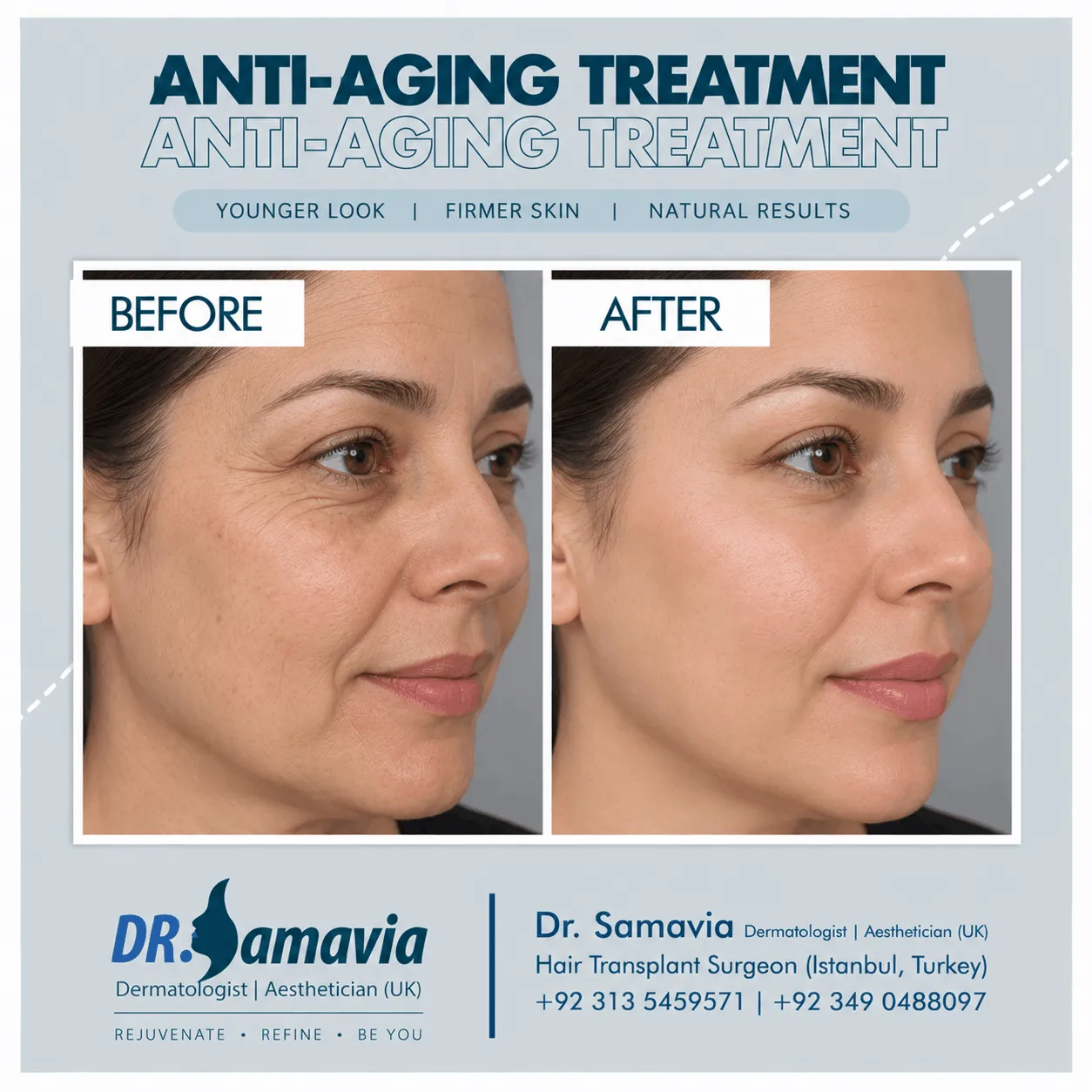
What is Anti-Aging Treatment?
Anti-Aging Treatment is an umbrella term for treatments designed to improve visible changes that develop as skin and facial tissues age.
Ageing affects several structures rather than only the surface of the skin.
Changes can include:
- Reduced collagen and elastin
- Fine lines and wrinkles
- Loss of facial volume
- Changes in fat distribution
- Reduced skin hydration
- Uneven pigmentation
- Sun damage
- Rougher skin texture
- Reduced firmness
- Mild facial or neck laxity
Because these changes have different causes, one procedure cannot correct every sign of ageing.
For example, dynamic expression lines may respond to botulinum toxin, while facial volume loss may be better addressed with selected dermal fillers. Pigmentation or texture may require skincare, peels, microneedling or laser-based treatment.
An effective anti-aging plan therefore starts by identifying which ageing changes are actually present rather than automatically performing the same treatment for every patient.
What Is Anti-Aging Treatment Used For?
Anti-aging treatments may be considered for concerns including:
- Forehead lines
- Frown lines
- Crow's feet
- Fine facial lines
- Deeper wrinkles
- Facial volume loss
- Reduced cheek fullness
- Uneven skin tone
- Sun spots or age spots
- Dull-looking skin
- Rough skin texture
- Enlarged-looking pores
- Mild skin laxity
- Reduced jawline definition
- Early neck ageing
- General photoageing
Treatment can also focus on prevention of premature skin ageing.
Daily broad-spectrum sunscreen is particularly important because ultraviolet exposure contributes significantly to wrinkles, pigmentation changes and other signs of premature ageing. The American Academy of Dermatology recommends broad-spectrum SPF 30 or higher as a core part of an anti-aging skincare plan.
What concerns can it address?
Fine lines and dynamic wrinkles
Expression-related lines such as frown lines, forehead lines and crow's feet may be treated with appropriately selected botulinum toxin products.
Facial volume loss
Age-related loss of facial fullness can sometimes be treated with dermal fillers in suitable anatomical areas.
Skin texture
Microneedling, chemical peels, resurfacing procedures or appropriate skincare may help improve rough texture and selected fine lines.
Pigmentation and sun damage
Age spots, uneven pigmentation and other signs of photodamage may be treated using topical therapies, chemical peels or selected laser and light-based treatments.
Mild skin laxity
Energy-based treatments, selected thread procedures or other treatments may be considered when laxity is relatively mild.
Overall skin quality
Skincare, moisturisation, sun protection and selected procedures can help improve hydration, brightness and overall appearance.
The treatment plan should target the patient's actual concerns rather than simply performing multiple procedures because they are marketed as anti-aging.
Potential benefits
Depending on the treatment selected, potential benefits may include:
- Reduction in visible fine lines
- Softening of selected wrinkles
- Improved facial volume
- Improved skin texture
- More even-looking pigmentation
- Reduction in visible sun damage
- Improved skin hydration
- Improved facial contour
- Modest improvement in skin firmness
- More refreshed appearance
- Ability to customise treatment to different signs of ageing
Many anti-aging treatments are non-surgical and involve substantially shorter recovery than facelift surgery.
However, results depend on appropriate treatment selection and practitioner expertise. The American Academy of Dermatology notes that cosmetic outcomes depend considerably on the knowledge and skill of the clinician performing the treatment.
Limitations and realistic expectations
Anti-Aging Treatment cannot stop or permanently reverse biological ageing.
Non-surgical treatments generally aim to reduce specific visible signs rather than return the face permanently to an earlier age.
Results vary according to:
- Age
- Genetics
- Skin type
- Sun exposure
- Smoking
- Facial anatomy
- Degree of volume loss
- Degree of skin laxity
- Treatment selected
- Product used
- Individual healing response
- Lifestyle
Different procedures also have different limitations.
Botulinum toxin primarily treats selected muscle-related expression lines and does not replace lost facial volume.
Dermal fillers can replace or reshape volume but do not directly treat every pigmentation or skin-texture concern.
Skin resurfacing can improve texture and selected wrinkles but cannot provide the same degree of structural lifting as surgery.
Patients should be cautious about claims such as:
- “Permanent anti-aging”
- “10 years younger after one treatment”
- “No risks”
- “Permanent facelift without surgery”
- “One treatment fixes every sign of ageing”
- “Guaranteed results”
These claims do not reflect the limitations of current aesthetic treatments.
Who may be suitable?
Anti-aging treatment may be considered for adults concerned about:
- Fine lines
- Wrinkles
- Early volume loss
- Uneven pigmentation
- Sun damage
- Dull or rough skin
- Early skin laxity
- Facial ageing
- Preventive skin care
Suitability depends on the particular procedure.
A comprehensive consultation may assess:
- Skin type
- Facial anatomy
- Dynamic facial movement
- Degree of volume loss
- Pigmentation
- Skin texture
- Skin laxity
- Previous procedures
- Medications
- Medical conditions
- Lifestyle factors
- Desired result
Standardised photographs may be useful for treatment planning and follow-up.
Who may not be suitable?
There is no single contraindication list for all anti-aging treatments because each procedure has its own safety profile.
Treatment may need to be postponed or modified in patients with:
- Active skin infection
- Active significant inflammation
- Open wounds
- Certain uncontrolled medical conditions
- Known allergy to a proposed product
- Significant bleeding disorders
- Poor wound healing
- Certain immune-system conditions
- Unrealistic expectations
Pregnancy or breastfeeding may exclude certain elective injectable, prescription or device-based treatments.
Patients taking anticoagulants, antiplatelet medication, photosensitising medicines or other relevant drugs require individual assessment depending on the procedure.
Active inflammatory skin disease should generally be controlled before invasive cosmetic treatment.
How to prepare
Before treatment, tell your clinician about:
- Prescription medicines
- Blood-thinning medicines
- Vitamins and supplements
- Allergies
- Previous fillers
- Previous botulinum toxin
- Previous thread treatments
- Previous laser procedures
- Chemical peels
- Facial surgery
- History of cold sores
- Abnormal scarring
- Pregnancy or breastfeeding
- Medical conditions
The clinician should identify the treatments that are most appropriate and explain:
- What procedure is proposed
- What product or device will be used
- Expected improvement
- Likely duration
- Downtime
- Potential risks
- Alternative options
Do not stop prescribed medication without advice from the clinician responsible for that medication.
Patients undergoing resurfacing or pigmentation treatment may also receive instructions regarding sun exposure and active skincare products before treatment.
How the procedure works
Because Anti-Aging Treatment is personalised, the procedure varies according to the treatment plan.
1. Facial and skin assessment
The clinician evaluates skin quality, facial proportions, movement, volume and areas of concern.
2. Treatment prioritisation
The most significant ageing concerns are identified.
3. Treatment selection
One or more appropriate treatments may be recommended.
Possible options include:
Botulinum toxin:
Used for selected dynamic expression lines by temporarily reducing targeted muscle activity.
Dermal fillers:
Injectable gels used to restore or modify volume in approved or clinically appropriate treatment areas.
Microneedling:
Creates controlled micro-injuries that stimulate a wound-healing response and may improve fine lines and skin texture.
Chemical peels:
Use controlled chemical exfoliation to improve selected pigmentation, texture and signs of photoageing.
Laser resurfacing:
Uses controlled laser energy to treat selected wrinkles, pigmentation and skin-texture concerns.
Skin-tightening procedures:
Certain radiofrequency, ultrasound or other energy-based technologies may produce gradual tightening in appropriately selected patients.
Medical skincare:
May include sunscreen, moisturisers, retinoid-based treatments, antioxidants or pigmentation treatments according to clinical need.
4. Procedure
The selected treatment is performed using the appropriate protocol.
5. Aftercare
Treatment-specific recovery and skincare instructions are provided.
Combination treatment does not necessarily mean performing every procedure at once. Treatments may be staged to improve safety and allow results to be assessed progressively.
Results and treatment timeline
The timeline depends entirely on the treatment selected.
Botulinum toxin
Improvement develops gradually after injection and is temporary.
Dermal fillers
Volume change is often visible soon after treatment, although swelling can temporarily alter the initial appearance.
Most absorbable dermal fillers are temporary because the body gradually breaks down the material.
Microneedling and collagen-remodelling treatments
Results generally develop over several weeks or months as healing and remodelling occur.
Chemical peels
Improvements in texture or pigmentation develop as the treated skin heals and renews.
Laser resurfacing
The American Academy of Dermatology notes that laser resurfacing can improve wrinkles, dark spots and skin tightening, but it requires more downtime than many non-invasive tightening procedures.
Medical skincare
Changes are gradual and depend heavily on consistent use and ongoing sun protection.
Because ageing continues, maintenance is commonly required regardless of which non-surgical treatment is selected.
Risks and side effects
Risks depend on the chosen procedure.
Injectable-treatment risks
Temporary effects may include:
- Redness
- Swelling
- Tenderness
- Bruising
- Pain
- Temporary asymmetry
Botulinum toxin can potentially cause unwanted muscle weakness, eyelid or brow drooping and other adverse effects.
Dermal fillers can cause:
- Swelling
- Bruising
- Infection
- Nodules
- Allergic reactions
- Tissue injury
A rare but particularly serious filler complication is accidental injection into a blood vessel, which can cause tissue necrosis and potentially other severe complications.
Resurfacing-treatment risks
Depending on the treatment, possible complications include:
- Prolonged redness
- Hyperpigmentation
- Hypopigmentation
- Infection
- Herpes reactivation
- Scarring
Energy-based treatment risks
Possible effects include:
- Redness
- Swelling
- Burns
- Pigmentation changes
- Pain
- Scarring in uncommon cases
Every procedure should therefore have its own informed-consent discussion rather than treating “anti-aging” as one risk-free service.
Recovery and aftercare
Recovery varies significantly.
Some treatments allow immediate return to normal activities, while deeper resurfacing can require several days or longer.
General aftercare may include:
- Gentle cleansing
- Appropriate moisturisation
- Broad-spectrum sunscreen
- Avoiding unnecessary sun exposure
- Avoiding aggressive skincare until advised
- Avoiding rubbing or massaging injected areas when instructed
- Temporarily avoiding strenuous exercise after certain procedures
- Following all product-specific aftercare instructions
Daily sun protection is one of the most important long-term measures for reducing further photoageing.
Contact the clinic if you develop:
- Severe or increasing pain
- Blistering
- Significant swelling
- Pus or discharge
- Fever
- Persistent skin colour changes
- Visual symptoms after injectable treatment
- Unusual weakness or difficulty swallowing after botulinum toxin treatment
- Another significant unexpected reaction
Urgent assessment is important for severe symptoms following injectable procedures.
Alternatives and comparisons
Anti-aging treatment is usually a combination of options rather than one procedure competing against another.
Anti-Aging Treatment vs Botox
Botulinum toxin is one component of anti-aging treatment.
It primarily targets selected dynamic wrinkles caused by muscle movement, such as frown lines, forehead lines and crow's feet.
It does not treat every type of ageing.
Anti-Aging Treatment vs Dermal Fillers
Fillers primarily restore or modify volume.
They can improve selected wrinkles and age-related volume loss but do not replace skincare, resurfacing or treatment for every dynamic line.
Anti-Aging Treatment vs Laser Resurfacing
Laser resurfacing focuses primarily on skin texture, pigmentation and selected wrinkles.
It does not directly restore substantial facial volume.
Anti-Aging Treatment vs Thread Lift
Threads mechanically reposition selected mildly sagging facial tissues.
They do not address all pigmentation, texture or volume concerns.
Non-Surgical Anti-Aging vs Facelift
Non-surgical treatments can improve individual signs of ageing but cannot generally provide the degree of tissue repositioning or excess-skin removal achievable with facelift surgery.
Patients with significant jowls, neck laxity or substantial facial descent may benefit from consultation regarding surgical options.
What affects the cost?
The cost of Anti-Aging Treatment depends on the personalised treatment plan.
Factors may include:
- Type of procedure
- Number of treatment areas
- Product used
- Amount of injectable product
- Device or laser technology
- Number of sessions
- Degree of skin ageing
- Facial anatomy
- Combination treatments
- Medical skincare
- Follow-up appointments
- Maintenance treatment
A patient requiring treatment for forehead lines may have a very different plan from a patient seeking correction of volume loss, pigmentation and skin laxity.
For this reason, a fixed “anti-aging package” should not automatically be recommended without assessing the individual signs of ageing first.
Patient experiences
Reviews describe individual experiences and do not predict another patient's result.
I had a wonderful experience consulting with Dr. Samaviya Ejaz. She is an incredibly impressive and professional dermatologist. Her clinic is beautiful and has a calming atmosphere.
Umar Shah
Read on GoogleI had my hair fall consultation with Dr Samavia. She thoroughly explained the treatment. After PRF sessions my hair fall stopped and density improved. Highly recommend.
Moneeb Mumtaz
Read on GoogleI have had a few treatments at this clinic and I am happy with the outcomes. Dr. Samavia and her team are kind, professional, and trustworthy.
Sheikh Yousuf Kareem
Read on GoogleVisit Dr Samavia at Facetime Clinic
Use the verified Google profile for clinic directions, business details and linked patient reviews.
Clinical references
- Wrinkles — Cosmetic Treatment OptionsAmerican Academy of Dermatology · accessed 29 August 2026
- Younger-Looking Skin — Treatments for Signs of AgingAmerican Academy of Dermatology · accessed 29 August 2026
- Anti-Aging Skin CareAmerican Academy of Dermatology · accessed 29 August 2026
- Wrinkle Remedies: How to Reduce Signs of AgingAmerican Academy of Dermatology · accessed 29 August 2026
- Dermal Filler Do's and Don'ts for Wrinkles, Lips and MoreU.S. Food and Drug Administration · accessed 29 August 2026
Anti-Aging Treatment FAQs
What is the best Anti-Aging Treatment?
There is no single best anti-aging procedure for everyone. Botulinum toxin may be suitable for expression lines, fillers may help age-related volume loss, and microneedling, peels or laser procedures may be more appropriate for texture and pigmentation. The best plan depends on the patient's specific signs of ageing.
At what age should I start Anti-Aging Treatment?
There is no medically required age for starting cosmetic anti-aging procedures. Preventive measures such as daily broad-spectrum sunscreen and appropriate skincare can be useful from early adulthood. Procedural treatment should be considered according to visible concerns and individual goals rather than age alone.
Can Anti-Aging Treatment remove wrinkles permanently?
No non-surgical anti-aging treatment can permanently stop wrinkles from developing because facial movement, sun exposure and biological ageing continue. Different treatments can reduce selected wrinkles temporarily or improve them over time, but maintenance may be required.
How long do Anti-Aging Treatment results last?
Duration depends on the treatment. Botulinum toxin, dermal fillers, skin boosters and many other non-surgical treatments have temporary effects, while collagen-remodelling procedures may produce gradual changes that persist for varying periods. A specific duration should be discussed for the exact procedure being recommended.
Is Anti-Aging Treatment safe?
Many aesthetic procedures can be performed safely in appropriately selected patients, but none is completely risk-free. Risks range from temporary redness or bruising to uncommon but serious complications such as infection, scarring, vascular injury or unwanted muscle weakness. Safety depends on the product, device, practitioner expertise and patient selection.
Other Face Treatments guides
Book a consultation in Islamabad to review suitability, alternatives, expected recovery and individual risks.