
Hair Fall Treatment in Islamabad
Hair Fall Treatment is a personalised approach used to identify the cause of excessive hair shedding, progressive thinning or patchy hair loss and select treatment according to the diagnosis. Hair fall is a symptom rather than a single disease, and possible causes include androgenetic alopecia, telogen effluvium, alopecia areata, nutritional deficiencies, thyroid disorders, scalp disease, medications and certain scarring alopecias.
Some daily shedding is normal. The NHS notes that losing approximately 50 to 100 hairs per day can occur as part of the normal hair-growth cycle. Concern becomes greater when shedding noticeably increases, the scalp becomes more visible, the hairline recedes, bald patches develop or hair density progressively decreases.
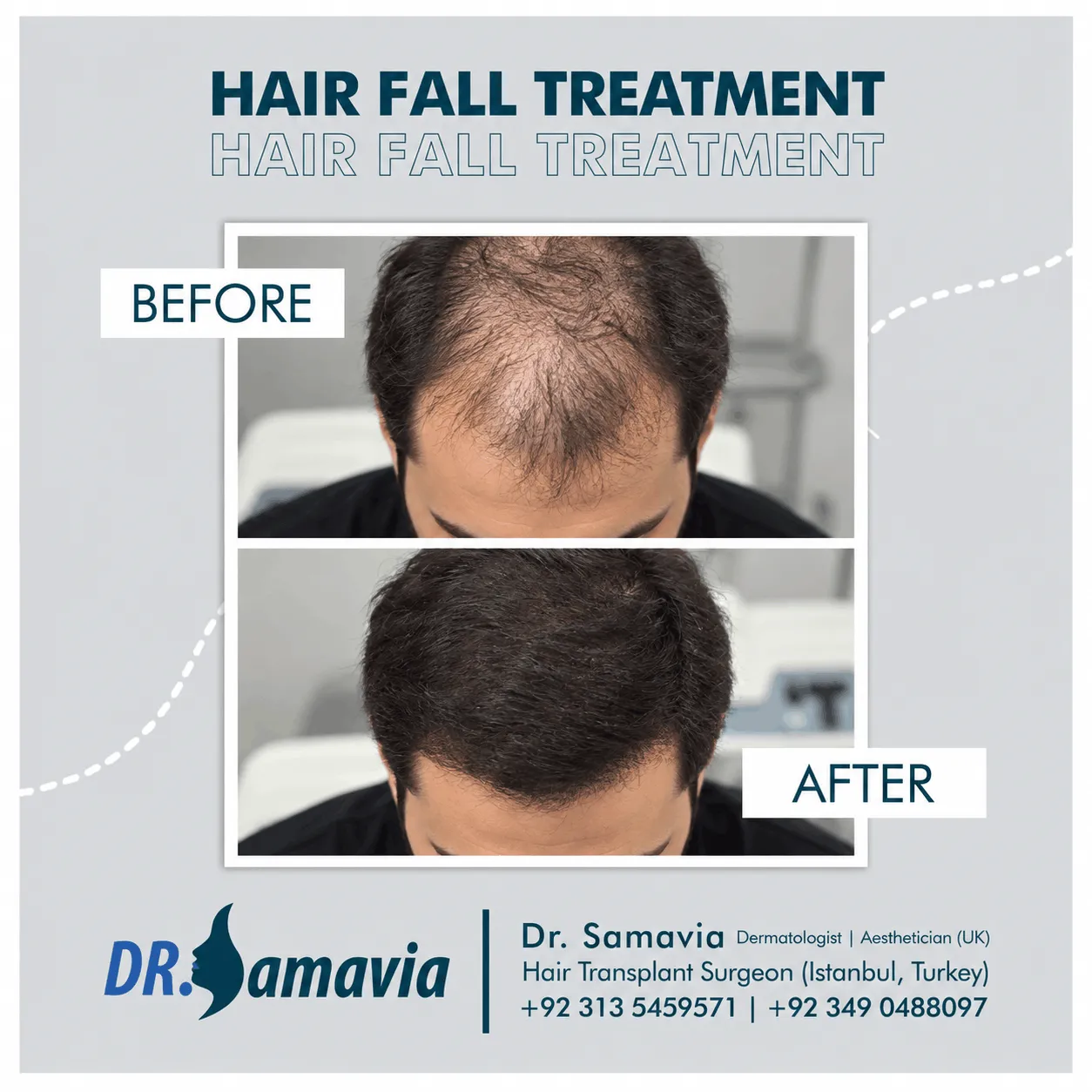
What is Hair Fall Treatment?
Hair Fall Treatment begins by determining why the hair is falling.
Hair loss can occur because of:
- Increased shedding
- Progressive follicular miniaturisation
- Autoimmune disease
- Inflammation
- Scalp infection
- Hair-shaft breakage
- Nutritional deficiency
- Hormonal or thyroid disorders
- Medication
- Physical or physiological stress
- Destruction of hair follicles in scarring alopecia
DermNet broadly categorises hair loss according to mechanisms including increased telogen shedding, interruption of active hair growth, conversion of thick terminal hairs into finer vellus hairs, hair-shaft abnormalities and inflammatory conditions that damage follicles.
Because these mechanisms are different, no single shampoo, injection or supplement can appropriately treat every patient.
The American Academy of Dermatology emphasises that the key to successful hair-loss treatment is identifying the true cause first.
What Is Hair Fall Treatment Used For?
Hair Fall Treatment may be considered for:
- Excessive daily shedding
- Gradual hair thinning
- Male pattern hair loss
- Female pattern hair loss
- Receding hairline
- Crown thinning
- Widening central hair part
- Diffuse thinning
- Sudden patchy hair loss
- Post-illness hair shedding
- Postpartum shedding
- Hair fall following rapid weight loss
- Hair loss associated with iron deficiency
- Thyroid-related hair loss
- Traction-related hair loss
- Scalp disease associated with shedding
- Treatment-related hair loss
- Selected scarring alopecias
Treatment should address the diagnosis rather than only the symptom of visible hair fall.
What concerns can it address?
Excessive Hair Shedding
Diffuse shedding may occur with telogen effluvium.
Possible triggers include:
- Significant illness
- High fever
- Surgery
- Childbirth
- Rapid weight loss
- Nutritional deficiency
- Iron deficiency
- Psychological or physiological stress
- Certain medications
- Thyroid disorders
Telogen effluvium often becomes noticeable two to four months after a triggering event, rather than immediately.
Male Pattern Hair Loss
Male androgenetic alopecia commonly affects:
- Temples
- Frontal hairline
- Mid-scalp
- Crown
Hair follicles gradually miniaturise and produce finer, shorter hairs.
Early treatment can help slow progression and preserve follicles that are still active.
Female Pattern Hair Loss
Female pattern hair loss commonly produces:
- Widening of the central part
- Reduced density over the crown
- Diffuse thinning over the upper scalp
The frontal hairline is often relatively preserved.
Other causes of diffuse shedding can resemble female pattern hair loss, so diagnosis is important before treatment.
Alopecia Areata
Alopecia areata is an autoimmune condition that may produce sudden:
- Round bald patches
- Scalp hair loss
- Eyebrow loss
- Beard hair loss
- More extensive hair loss in severe disease
Treatment depends on the amount, location and duration of hair loss. Some limited cases can regrow spontaneously, while others require medical therapy.
Hair Fall Related to Deficiency or Illness
Iron deficiency, thyroid disease and other medical conditions can contribute to diffuse hair loss.
Correcting an identified medical cause may allow hair growth to recover.
Scarring Hair Loss
Some inflammatory alopecias permanently destroy hair follicles.
Once a follicle has been destroyed by scarring alopecia, it cannot normally regrow hair. Early diagnosis is therefore particularly important to prevent additional permanent loss.
Potential benefits
Depending on the diagnosis, Hair Fall Treatment may help:
- Reduce excessive shedding
- Slow progressive hair thinning
- Preserve existing follicles
- Improve hair density in responding patients
- Stimulate selected miniaturised follicles
- Correct an underlying deficiency
- Treat scalp inflammation
- Control autoimmune hair loss
- Reduce further permanent damage in selected scarring alopecias
- Improve scalp health
- Provide an evidence-based long-term maintenance plan
Successful treatment does not always mean producing completely new hair.
In progressive genetic hair loss, stabilising or slowing further loss can itself be an important treatment outcome.
Limitations and realistic expectations
No Hair Fall Treatment works for every cause or every patient.
Treatment cannot guarantee:
- Complete regrowth
- Permanent results without maintenance
- Restoration of follicles that have been permanently destroyed
- A full juvenile hairline
- Immediate cessation of shedding
- Identical results in every patient
- Complete reversal of advanced genetic baldness
The NHS specifically notes that no hair-loss treatment is 100% effective.
Treatment response depends on:
- Diagnosis
- Duration of hair loss
- Degree of follicular miniaturisation
- Age
- Genetics
- Medical conditions
- Hormonal influences
- Treatment adherence
- Presence of scarring
- Nutritional status
Patients should be cautious about claims such as:
- “100% guaranteed hair regrowth”
- “Permanent cure for hair loss”
- “One injection stops all hair fall”
- “Vitamin deficiency causes every case”
- “PRP works for every type of alopecia”
- “Hair oil can reverse genetic baldness”
These claims are not realistic.
Common Causes of Hair Fall
Androgenetic Alopecia
Also called:
- Male pattern hair loss
- Female pattern hair loss
- Genetic hair loss
This is one of the most common causes of progressive thinning.
Genetic and hormonal influences gradually cause susceptible follicles to miniaturise.
Telogen Effluvium
Telogen effluvium is excessive shedding caused when a larger-than-normal number of follicles enter the resting phase.
Triggers can include:
- Illness
- Fever
- Surgery
- Childbirth
- Weight loss
- Nutritional deficiency
- Iron deficiency
- Thyroid disorders
- Medication
- Significant stress
It is generally non-scarring and often improves after the underlying trigger resolves. DermNet describes acute telogen effluvium as typically self-correcting when the cause is addressed.
Alopecia Areata
This is an autoimmune form of hair loss.
Treatment varies according to severity.
Traction Alopecia
Repeated tension from tight hairstyles can damage follicles.
Possible triggers include:
- Very tight ponytails
- Tight braids
- Hair extensions
- Repeated pulling hairstyles
Early traction alopecia may improve after removing the source of tension.
Long-standing disease can become permanent if scarring develops.
Scalp Conditions
Hair shedding can accompany conditions such as:
- Seborrheic dermatitis
- Psoriasis
- Fungal infection
- Other inflammatory scalp disorders
Treatment should address the underlying condition.
Nutritional Deficiency
Deficiencies should be confirmed rather than assumed.
Possible contributors can include:
- Iron deficiency
- Significant protein deficiency
- Certain vitamin deficiencies
Taking supplements without evidence of deficiency does not automatically improve hair growth.
The AAD cautions that excessive intake of certain nutrients—including selenium, vitamin A and vitamin E—has itself been associated with hair loss.
Who may be suitable?
Hair Fall Treatment may be appropriate for people experiencing:
- Increased shedding
- Receding hairline
- Crown thinning
- Widening hair part
- Reduced hair density
- Patchy hair loss
- Postpartum shedding
- Hair loss after significant illness
- Progressive genetic thinning
- Hair loss associated with scalp symptoms
A proper consultation may assess:
- When hair fall began
- Whether it is sudden or gradual
- Pattern of thinning
- Family history
- Recent illness
- Surgery
- Weight loss
- Diet
- Medication
- Pregnancy or childbirth
- Menstrual or hormonal history where relevant
- Scalp symptoms
- Previous hair treatments
Who may not be suitable?
Medical assessment is especially important when hair loss is:
- Sudden
- Rapidly progressive
- Patchy
- Associated with scalp pain
- Associated with burning or severe itching
- Associated with pustules
- Associated with significant scaling
- Producing shiny or scarred areas
- Causing eyebrow or eyelash loss
- Associated with systemic symptoms
- Developing in a child
- Occurring after a new medication
Patients with possible scarring alopecia should be evaluated promptly because delayed treatment can result in permanent follicular destruction.
How to prepare
Before a Hair Fall consultation, provide information about:
- Current medications
- Supplements
- Minoxidil
- Finasteride
- Previous PRP or PRF
- Hair transplantation
- Recent illness
- Surgery
- Weight changes
- Diet changes
- Pregnancy or childbirth
- Family history
- Thyroid disease
- Iron deficiency
- Previous blood tests
- Hair-care routine
- Hair colouring or chemical treatment
If available, bring:
- Previous blood-test reports
- Previous treatment prescriptions
- Before-treatment photographs
- Details of hair-loss products currently being used
Avoid beginning multiple new supplements immediately before diagnosis, as this can make it more difficult to understand what is actually necessary.
How the procedure works
Diagnosis may involve several steps.
1. Medical History
The clinician asks about:
- Duration
- Pattern
- Rate of hair loss
- Family history
- Diet
- Recent illness
- Stress
- Weight changes
- Medication
- Pregnancy
- Hair-care practices
2. Scalp Examination
The scalp is assessed for:
- Hair density
- Miniaturisation
- Bald patches
- Scaling
- Inflammation
- Scarring
- Broken hairs
3. Hair Pull Test
A clinician may gently pull a small group of hairs to assess active shedding.
4. Hair Scan or Trichoscopy
Magnified examination can help assess:
- Hair-shaft diameter
- Miniaturisation
- Follicular openings
- Broken hairs
- Scalp abnormalities
5. Blood Tests
Blood testing may be considered when history or examination suggests an underlying medical cause.
Possible investigations may include:
- Complete blood count
- Ferritin or iron studies
- Thyroid function
- Selected vitamin testing
- Hormonal investigations when clinically indicated
Mayo Clinic notes that blood testing can help identify medical conditions responsible for hair loss.
6. Scalp Biopsy
A biopsy is not required for most routine hair loss.
It may be considered when:
- Diagnosis remains uncertain
- Scarring alopecia is suspected
- Another inflammatory condition needs clarification
Mayo Clinic and the AAD both list scalp biopsy among investigations that may occasionally be required.
Hair Fall Treatment Options
Treatment depends entirely on the diagnosis.
Minoxidil
Topical minoxidil is an established treatment for androgenetic hair loss.
It may:
- Reduce hair loss
- Stimulate growth in some follicles
- Increase density in responding patients
Mayo Clinic notes that treatment generally requires at least six months before prevention of further loss and early regrowth can be properly assessed. Continued use is usually required to maintain benefit.
Possible effects include:
- Scalp irritation
- Unwanted facial hair growth
- Initial temporary shedding in some patients
Minoxidil should be used according to an appropriate medical plan.
Finasteride
Finasteride is a prescription medicine used primarily for male pattern hair loss.
It reduces conversion of testosterone into dihydrotestosterone through inhibition of 5-alpha-reductase.
In responding men it may:
- Slow hair loss
- Preserve existing hair
- Produce some regrowth
Benefits require continued treatment.
Potential adverse effects should be discussed before prescribing.
Finasteride is generally not recommended for women who are or may become pregnant, and pregnant patients should avoid handling crushed or broken tablets because of the potential risk to a male fetus.
Other Prescription Treatments
Depending on diagnosis and patient factors, a clinician may consider treatments such as:
- Spironolactone
- Selected anti-androgen therapy
- Low-dose oral minoxidil
- Dutasteride in selected circumstances
- Corticosteroids
- JAK inhibitors for appropriate alopecia areata
- Other disease-specific medicines
Some of these uses may be off-label, and each has its own contraindications and monitoring requirements.
PRP
Platelet-Rich Plasma uses a concentrated component of the patient's own blood.
PRP is commonly considered as an adjunct for selected patients with androgenetic alopecia.
Evidence suggests potential improvement in hair density for some patients, but protocols vary and response is not guaranteed.
PRP should not replace diagnosis of unexplained shedding.
PRF
Platelet-Rich Fibrin is another autologous blood-derived treatment.
It is newer and has a smaller evidence base than PRP.
It may be considered for selected patients but should not be marketed as universally superior to established treatments.
Low-Level Laser or Light Therapy
Selected low-level laser/light devices may help improve hair density in androgenetic alopecia.
Treatment generally requires repeated use over several months.
Hair Transplant
Hair transplantation relocates existing permanent donor follicles into selected thinning areas.
It may be considered for suitable patients with established pattern hair loss and adequate donor hair.
A transplant does not stop continuing loss of untreated native hair, so long-term medical management may still be important.
Hair Fall Treatment for Telogen Effluvium
Telogen effluvium usually requires a different strategy from genetic hair loss.
The priority is identifying and correcting the trigger.
Potential causes may include:
- Iron deficiency
- Thyroid disease
- Significant illness
- Surgery
- Childbirth
- Weight loss
- Nutritional deficiency
- Medication
DermNet states that acute telogen effluvium is usually self-correcting and recommends correcting identified problems such as abnormal thyroid function or deficient iron, vitamin B12 or folate when present.
Hair regrowth takes time because follicles must return to an active growth cycle.
Hair Fall Treatment for Alopecia Areata
Alopecia areata requires a different medical approach.
Depending on severity, treatment may include:
- Topical corticosteroids
- Corticosteroid injections
- Minoxidil as supportive treatment
- Contact immunotherapy
- Systemic therapy
- JAK inhibitors in appropriate moderate-to-severe disease
A limited patch can sometimes regrow without treatment.
The AAD notes that no single alopecia-areata treatment works for everyone, and management depends on age, duration and extent of hair loss.
Hair Fall Treatment for Scarring Alopecia
Scarring alopecia is fundamentally different from pattern hair loss or telogen effluvium.
Inflammation damages and eventually destroys the follicles.
Once destroyed, follicles generally cannot produce new hair.
Treatment therefore focuses on:
- Stopping inflammation
- Preventing further loss
- Preserving remaining follicles
rather than promising regrowth from areas where follicles have already been permanently destroyed.
Results and treatment timeline
Hair growth is slow, so Hair Fall Treatment generally requires patience.
First several weeks
Changes may be limited.
Some treatments, including minoxidil, may temporarily increase shedding early in treatment.
Around 3 months
Some patients may begin noticing:
- Reduced shedding
- Early regrowth
- Improved hair stability
depending on the diagnosis.
Around 4 to 6 months
This is often a more useful period for assessing response to medical pattern-hair-loss treatment.
AAD guidance notes that topical minoxidil is often used for approximately four to six months before its effectiveness is meaningfully evaluated.
Around 6 to 12 months
Hair-density changes become easier to evaluate in many treatment programmes.
Mayo Clinic states that minoxidil can require at least six months before regrowth and prevention of further loss become evident.
Long-term
Pattern hair loss generally requires continued treatment.
Stopping effective treatments such as minoxidil or finasteride can allow genetic hair loss to progress again.
Risks and side effects
Risks depend on treatment.
Minoxidil
Possible side effects include:
- Scalp irritation
- Dryness
- Itching
- Unwanted facial hair growth
- Temporary increased shedding
Oral minoxidil has systemic risks and requires medical assessment when used.
Finasteride
Potential adverse effects can include:
- Reduced libido
- Erectile or sexual dysfunction
- Other medication-specific effects
The NHS also advises seeking medical care for significant mood changes associated with finasteride.
Spironolactone
Possible effects can include:
- Menstrual changes
- Breast tenderness
- Dizziness
- Blood-pressure changes
- Electrolyte abnormalities
Suitability and monitoring should be determined medically.
PRP or PRF
Potential effects include:
- Injection pain
- Tenderness
- Swelling
- Bruising
- Bleeding
- Infection
- Headache
Microneedling
Possible effects include:
- Redness
- Tenderness
- Pinpoint bleeding
- Irritation
- Infection
- Pigmentation changes
Hair Transplant
Hair transplant is surgical and has separate risks including:
- Bleeding
- Infection
- Scarring
- Folliculitis
- Shock loss
- Poor graft survival
- Unnatural growth direction
Recovery and aftercare
Aftercare depends on treatment.
For general hair-loss management, patients may be advised to:
- Use gentle shampoo.
- Condition fragile hair appropriately.
- Avoid aggressive brushing.
- Minimise excessive heat damage.
- Avoid repeatedly pulling the hair tightly.
- Follow medication instructions consistently.
- Maintain adequate protein and overall nutrition.
- Correct confirmed nutritional deficiencies.
- Attend follow-up appointments.
- Take standardised photographs to monitor progress.
The AAD recommends gentle hair care because thinning hair can be fragile and susceptible to breakage.
Do not repeatedly start and stop prescription hair-loss treatment without discussing this with your clinician.
Alternatives and comparisons
Hair Fall Treatment vs Hair Cleansing
These services have different purposes.
Hair Cleansing focuses on:
- Oil
- Sweat
- Flakes
- Styling-product buildup
- General scalp hygiene
Hair Fall Treatment focuses on determining why hair is shedding or thinning.
A clean scalp may support comfort and hygiene, but cleansing alone does not reverse androgenetic alopecia, alopecia areata, iron deficiency or scarring alopecia.
Hair Fall Treatment vs PRP
PRP is one possible treatment within a broader hair-loss programme.
It should not be used as the diagnosis itself.
For example:
- Iron-deficiency shedding needs correction of the deficiency.
- Thyroid-related shedding needs management of the thyroid disorder.
- Alopecia areata requires disease-specific treatment.
- Scarring alopecia requires control of inflammation.
- Pattern hair loss may involve minoxidil, finasteride or other appropriate treatments.
PRP may be added in selected cases but is not appropriate for every cause of hair fall.
Hair Fall Treatment vs Hair Transplant
Hair Fall Treatment primarily aims to:
- Diagnose the cause
- Reduce ongoing loss
- Preserve follicles
- Promote growth where possible
Hair transplantation redistributes existing follicles from donor areas into areas of permanent thinning.
Patients with active uncontrolled hair loss should generally have the underlying condition assessed before transplant planning.
What affects the cost?
The cost of Hair Fall Treatment depends on:
- Diagnosis
- Consultation
- Hair Scan or trichoscopy
- Blood tests
- Prescription medication
- PRP
- PRF
- Low-level laser treatment
- Microneedling
- Number of sessions
- Follow-up visits
- Whether hair transplantation is eventually required
A patient with temporary telogen effluvium may need a very different treatment plan from someone with advanced androgenetic alopecia.
Similarly, repeated expensive injections are not automatically appropriate when the underlying cause is:
- Iron deficiency
- Thyroid dysfunction
- Medication
- Scalp disease
The treatment plan should therefore begin with diagnosis rather than a fixed hair-fall package.
Patient experiences
Reviews describe individual experiences and do not predict another patient's result.
I had a wonderful experience consulting with Dr. Samaviya Ejaz. She is an incredibly impressive and professional dermatologist. Her clinic is beautiful and has a calming atmosphere.
Umar Shah
Read on GoogleI had my hair fall consultation with Dr Samavia. She thoroughly explained the treatment. After PRF sessions my hair fall stopped and density improved. Highly recommend.
Moneeb Mumtaz
Read on GoogleI have had a few treatments at this clinic and I am happy with the outcomes. Dr. Samavia and her team are kind, professional, and trustworthy.
Sheikh Yousuf Kareem
Read on GoogleVisit Dr Samavia at Facetime Clinic
Use the verified Google profile for clinic directions, business details and linked patient reviews.
Clinical references
- How to Treat Hair LossAmerican Academy of Dermatology · accessed 4 September 2026
- Hair Loss: Diagnosis and TreatmentMayo Clinic · accessed 4 September 2026
- Hair Loss: Who Gets It and CausesAmerican Academy of Dermatology · accessed 4 September 2026
- Alopecia Areata: Diagnosis and TreatmentAmerican Academy of Dermatology · accessed 4 September 2026
- Telogen EffluviumDermNet · accessed 4 September 2026
- Hair Loss, Balding and Hair SheddingDermNet · accessed 4 September 2026
Hair Fall Treatment FAQs
What is the best treatment for Hair Fall?
There is no single best treatment for every type of hair fall. Genetic pattern hair loss may respond to treatments such as minoxidil and, in appropriate men, finasteride. Telogen effluvium requires identification and correction of its trigger, while alopecia areata and scarring alopecia require completely different medical approaches. Accurate diagnosis should come before treatment.
How much daily Hair Fall is normal?
Some hair shedding is part of the normal growth cycle. The NHS states that approximately 50 to 100 hairs can be lost each day without indicating disease. Assessment becomes more important when shedding clearly increases, the scalp becomes progressively visible, the hairline changes or bald patches appear.
Can Hair Fall caused by stress or illness grow back?
Often, yes. Significant illness, fever, surgery, childbirth, weight loss or other physiological stress can trigger telogen effluvium. Hair shedding commonly appears several months after the trigger and may gradually recover once the underlying cause resolves. Persistent shedding should still be evaluated because other conditions can occur at the same time.
How long does Hair Fall Treatment take to show results?
The timeline depends on the cause. Temporary shedding can take several months to recover, while pattern hair-loss medicines generally need months of continuous use. Mayo Clinic notes that minoxidil may require at least six months before regrowth and reduction in further loss can be properly assessed.
Do I need blood tests for Hair Fall?
Not everyone requires the same blood tests. Testing may be useful when history or examination suggests iron deficiency, thyroid disease, nutritional deficiency, hormonal abnormalities or another medical condition. Hair loss should therefore be assessed first so testing can be targeted rather than ordering every possible test automatically.
Other Hair Procedures guides
Book a consultation in Islamabad to review suitability, alternatives, expected recovery and individual risks.