Botox Treatment in Islamabad
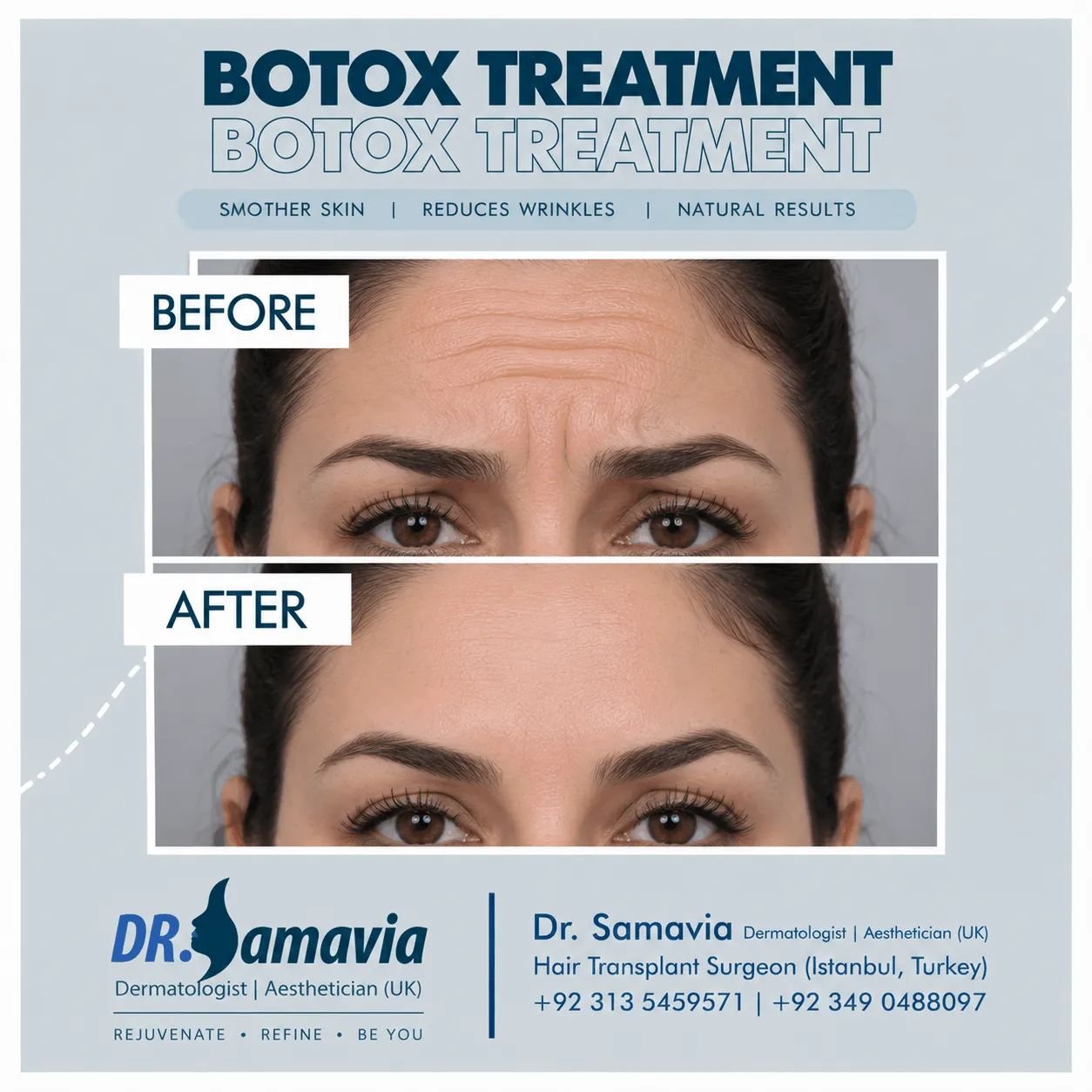
Botox treatment uses small, carefully placed injections of botulinum toxin to temporarily reduce activity in selected facial muscles. In cosmetic practice, it is commonly used to soften dynamic wrinkles—lines that become more noticeable when a person frowns, smiles, squints or raises the eyebrows.
Botox® Cosmetic is a brand of onabotulinumtoxinA. Other botulinum toxin products also exist, but they are not identical and their potency units should not be considered interchangeable. Treatment should be individually planned according to facial anatomy, muscle strength, expression and the desired degree of movement reduction.
What is Botox Treatment?
Botox® Cosmetic contains onabotulinumtoxinA, a purified form of botulinum toxin type A.
Botulinum toxin works by temporarily reducing nerve signalling to specifically targeted muscles. When the treated muscle contracts less strongly, dynamic lines caused by repeated facial movement can become softer and less noticeable.
This mechanism makes botulinum toxin particularly useful for expression-related wrinkles rather than wrinkles caused primarily by:
- Loss of facial volume
- Significant skin laxity
- Deep sun damage
- Skin-texture changes
- Permanent etched lines unrelated to muscle movement
The treatment does not remove the muscle or permanently paralyse it. Its effect gradually reduces as neuromuscular signalling recovers.
“Botox” is often used informally to describe all cosmetic botulinum toxin injections, but Botox® is a specific brand. Other botulinum toxin formulations have their own characteristics, approved indications and dosing systems.
What Is Botox Treatment Used For?
Cosmetic botulinum toxin treatment is commonly used to improve facial lines associated with repeated muscle movement.
Depending on the specific product, local regulatory approval, facial anatomy and clinician assessment, treatment may be considered for areas such as:
- Frown lines between the eyebrows
- Horizontal forehead lines
- Crow's feet around the eyes
- Selected neck bands
Other facial applications are also used in aesthetic medicine, but some may represent off-label treatment depending on the product and country.
Examples sometimes discussed in appropriately selected patients include:
- Bunny lines around the nose
- Chin dimpling
- Downturned mouth appearance
- Gummy smile
- Prominent masseter muscles
- Selected jawline concerns
- Lip-flip treatment
An off-label use is not automatically inappropriate, but patients should understand when a proposed treatment falls outside the officially approved indication for the specific product.
What concerns can it address?
Frown lines
Repeated contraction of the muscles between the eyebrows can create vertical glabellar lines.
Botulinum toxin can temporarily reduce the strength of these muscles and soften the appearance of dynamic frown lines.
Forehead lines
Horizontal forehead lines occur partly because of repeated contraction of the frontalis muscle.
Careful treatment can soften these lines while attempting to maintain appropriate eyebrow position and natural facial expression.
Crow's feet
Lines around the outer corners of the eyes become more visible when smiling or squinting.
Selected injections can temporarily reduce activity in the responsible muscles.
Neck bands
Prominent platysma bands can sometimes be treated using botulinum toxin in appropriately selected patients.
Other expression-related concerns
Depending on anatomy and clinical judgement, botulinum toxin may also be used for selected lower-face or jaw concerns.
These applications require particular care because excessive or incorrectly placed treatment can interfere with normal facial movement.
Potential benefits
Potential benefits of Botox treatment include:
- Minimally invasive procedure
- No surgical incision
- Usually no anaesthesia required
- Short treatment time
- Minimal interruption to normal activities
- Can soften selected dynamic wrinkles
- Treatment can be customised according to facial movement
- Results develop without adding facial volume
- Temporary effect allows treatment plans to be adjusted over time
- Can be combined with other aesthetic treatments when appropriate
Appropriate treatment aims to soften excessive muscle activity rather than eliminate all facial expression.
A natural-looking result depends heavily on understanding facial anatomy and using an appropriate dose in the correct muscles.
Limitations and realistic expectations
Botox is temporary.
It does not permanently remove wrinkles or stop facial ageing.
The treatment is most effective for dynamic wrinkles caused by muscle movement.
Lines that remain visible when the face is completely relaxed may improve less dramatically, particularly if they are deep and longstanding.
Botox also does not:
- Replace lost facial volume
- Remove loose skin
- Treat every type of wrinkle
- Permanently lift the face
- Permanently change facial anatomy
- Guarantee perfect facial symmetry
- Stop the natural ageing process
Patients should also understand that more toxin does not automatically produce a better cosmetic result.
Excessive weakening of facial muscles can produce an unnatural appearance, eyebrow imbalance, eyelid or brow drooping, or unwanted weakness in nearby muscles.
The objective should therefore be appropriate movement reduction rather than complete immobilisation of the face.
Who may be suitable?
Botox treatment may be considered for adults concerned about:
- Glabellar or frown lines
- Forehead expression lines
- Crow's feet
- Selected neck bands
- Other appropriate muscle-related cosmetic concerns
- Preventing dynamic lines from becoming increasingly prominent
Suitable patients should have:
- Realistic expectations
- Appropriate facial anatomy
- No infection at the proposed injection sites
- No relevant contraindication to botulinum toxin
During consultation, the clinician may evaluate:
- Facial expressions
- Muscle strength
- Eyebrow position
- Eyelid position
- Facial symmetry
- Previous botulinum toxin treatment
- Previous fillers or facial surgery
- Medical history
- Current medication
- Desired degree of facial movement
Treatment should be individually mapped rather than using exactly the same injection pattern in every patient.
Who may not be suitable?
Botox may be unsuitable or require additional medical assessment in patients with:
- Infection at a proposed injection site
- Known hypersensitivity to the botulinum toxin preparation or its ingredients
- Certain neuromuscular disorders
- Significant pre-existing swallowing difficulties
- Certain breathing problems
- Significant weakness in the intended treatment area
- Previous serious reaction to botulinum toxin
Additional caution may be required with medications that interfere with neuromuscular transmission.
Pregnancy or breastfeeding should be discussed before elective cosmetic treatment because adequate safety information is limited.
The clinician should also know if the patient has recently received another botulinum toxin product.
Patients with significant eyebrow or eyelid drooping before treatment require particularly careful assessment because inappropriate forehead treatment may worsen the appearance.
How to prepare
Before Botox treatment, tell your clinician about:
- All prescription medicines
- Over-the-counter medication
- Aspirin
- Blood-thinning medication
- Vitamins and supplements
- Muscle relaxants
- Certain antibiotics
- Previous botulinum toxin treatment
- Previous dermal fillers
- Facial surgery
- Allergies
- Neurological or muscular conditions
- Problems swallowing
- Breathing difficulties
- Pregnancy or plans for pregnancy
- Breastfeeding
Tell the clinician which botulinum toxin product you previously received and approximately when it was administered.
Do not stop prescribed anticoagulants, aspirin or other medicines without advice from the clinician who prescribed them.
Baseline photographs and assessment of facial movement may be useful before treatment.
How the procedure works
1. Facial assessment
The clinician examines the face both at rest and during expressions such as frowning, smiling and raising the eyebrows.
2. Treatment planning
Specific muscles and injection points are selected according to anatomy and treatment goals.
3. Skin preparation
The skin is cleaned and disinfected.
4. Injection
A very fine needle is used to place small amounts of botulinum toxin into selected muscles.
The number of injections varies according to:
- Treatment area
- Facial anatomy
- Muscle strength
- Product
- Previous treatment response
- Desired result
5. Final assessment
The injection areas are checked for bleeding, swelling or another immediate reaction.
6. Aftercare
The patient receives instructions about touching the area, exercise and when to return for review.
The procedure itself is usually relatively brief.
Results and treatment timeline
Botox does not produce its full cosmetic effect immediately.
Immediately after treatment
Small raised areas, mild redness or pinpoint injection marks may temporarily be visible.
These generally settle relatively quickly.
Around 3 to 7 days
Many patients begin noticing reduced muscle movement and softening of dynamic lines.
Following the first week
The treatment effect becomes easier to assess as botulinum toxin activity develops.
Around 2 weeks
Many clinicians use approximately this point for follow-up because the result has had time to develop more fully.
Around 3 to 4 months
For cosmetic facial treatment, the effect commonly lasts approximately three to four months, although individual duration varies.
As the effect wears off, muscle movement gradually returns and wrinkles can become more noticeable again.
Repeat treatment may be considered when clinically appropriate.
Risks and side effects
Botulinum toxin treatment is generally well tolerated when appropriately administered, but it is a prescription injectable treatment and is not risk-free.
Temporary effects can include:
- Injection-site pain
- Redness
- Swelling
- Tenderness
- Bruising
- Headache
Depending on the area treated, potential complications can include:
- Eyelid drooping
- Brow drooping
- Temporary facial weakness
- Facial asymmetry
- Unwanted change in facial expression
- Dry eye or eye-related symptoms
- Difficulty performing certain facial movements
In clinical studies of Botox Cosmetic for glabellar lines, eyelid ptosis was reported in approximately 3% of treated participants in the relevant trials.
Botulinum toxin products also carry an important warning regarding the possibility of the toxin's effects spreading beyond the injection site.
Rare but potentially serious symptoms can include:
- Generalised muscle weakness
- Difficulty swallowing
- Difficulty speaking
- Difficulty breathing
- Double or blurred vision
These symptoms can occur hours to weeks after treatment and require urgent medical assessment.
Swallowing or breathing difficulties can be life-threatening.
Patients should therefore receive genuine prescription botulinum toxin from an appropriate source and treatment from a qualified healthcare professional.
Recovery and aftercare
Most patients can return to routine activities shortly after cosmetic Botox treatment.
Temporary redness or small injection-site bumps usually settle quickly.
Your clinician may advise you to:
- Avoid rubbing or massaging treated areas.
- Apply makeup gently rather than aggressively rubbing the skin.
- Avoid strenuous physical activity for a short period according to the supplied instructions.
- Avoid unnecessary pressure over treatment areas.
- Follow any treatment-specific instructions provided by the clinic.
The American Academy of Dermatology advises avoiding rubbing or massaging injected areas and waiting approximately two hours before strenuous exercise.
Do not attempt to massage an apparent uneven result yourself.
Contact the clinic if you experience:
- Significant eyelid or eyebrow drooping
- Severe or unusual weakness
- Persistent visual problems
- Significant difficulty speaking
- Difficulty swallowing
- Difficulty breathing
- Severe allergic symptoms
- Another unexpected reaction
Difficulty breathing, speaking or swallowing after botulinum toxin treatment requires urgent medical attention.
Alternatives and comparisons
The most appropriate alternative depends on the type of wrinkle or ageing concern.
Options may include:
- No treatment
- Medical-grade skincare
- Retinoid-based skincare where appropriate
- Chemical peels
- Microneedling
- Laser resurfacing
- Dermal fillers
- Skin boosters
- Energy-based skin tightening
- Thread lift
- Surgical facial procedures
Botox vs Dermal Fillers
Botox temporarily reduces activity in targeted muscles and is particularly useful for dynamic expression lines.
Dermal fillers add or restore volume beneath the skin.
For example, a dynamic frown line may respond to botulinum toxin, whereas age-related volume loss in another facial area may require a completely different approach.
The treatments are not interchangeable.
Botox vs Anti-Aging Skin Treatments
Botox focuses primarily on muscle-related wrinkles.
Laser, chemical peel, microneedling and medical skincare treatments focus more on concerns such as:
- Skin texture
- Pigmentation
- Sun damage
- Fine surface lines
A personalised anti-aging plan may therefore involve different treatments for different concerns.
Botox vs Thread Lift
A thread lift attempts to mechanically reposition mildly sagging tissue.
Botox reduces activity in selected muscles.
Botox cannot provide the same type of tissue suspension as a thread lift.
What affects the cost?
The cost of Botox Treatment can depend on:
- Botulinum toxin product used
- Number of treatment areas
- Dose required
- Strength of the patient's facial muscles
- Complexity of facial anatomy
- Previous treatment response
- Whether cosmetic or medical treatment is being performed
- Practitioner expertise
- Follow-up requirements
Dose should be determined according to anatomy and treatment goals rather than simply trying to inject the largest possible number of units.
It is also important to understand that units of different botulinum toxin products are not directly interchangeable.
A price comparison based only on the number of “units” can therefore be misleading when different products are being compared.
Patient experiences
Reviews describe individual experiences and do not predict another patient's result.
I had a wonderful experience consulting with Dr. Samaviya Ejaz. She is an incredibly impressive and professional dermatologist. Her clinic is beautiful and has a calming atmosphere.
Umar Shah
Read on GoogleI had my hair fall consultation with Dr Samavia. She thoroughly explained the treatment. After PRF sessions my hair fall stopped and density improved. Highly recommend.
Moneeb Mumtaz
Read on GoogleI have had a few treatments at this clinic and I am happy with the outcomes. Dr. Samavia and her team are kind, professional, and trustworthy.
Sheikh Yousuf Kareem
Read on GoogleVisit Dr Samavia at Facetime Clinic
Use the verified Google profile for clinic directions, business details and linked patient reviews.
Clinical references
- Botulinum Toxin Therapy: OverviewAmerican Academy of Dermatology · accessed 29 August 2026
- Botulinum Toxin Therapy: FAQsAmerican Academy of Dermatology · accessed 29 August 2026
- Botulinum Toxin Therapy: PreparationAmerican Academy of Dermatology · accessed 29 August 2026
- BOTOX Cosmetic (onabotulinumtoxinA) Prescribing InformationU.S. Food and Drug Administration · accessed 29 August 2026
- Botulinum Toxin — Risks and SafetyAmerican Society of Plastic Surgeons · accessed 29 August 2026
Botox Treatment FAQs
How long does Botox take to work?
Botulinum toxin does not work immediately. Many patients begin noticing a reduction in targeted muscle movement within approximately 3 to 7 days. The result continues to develop after treatment, and clinicians commonly assess the overall effect at around two weeks.
How long does Botox last?
For cosmetic facial wrinkles, the effect commonly lasts around three to four months, although duration varies between patients, treatment areas and products. Muscle movement gradually returns as the effect wears off, and repeat treatment may then be considered.
Will Botox make my face look frozen?
It does not have to. Appropriate treatment aims to weaken selected wrinkle-producing muscles while preserving natural expression. An excessively high dose or inappropriate placement can produce too little movement or unwanted weakness, which is why individual facial assessment and injection technique are important.
Is Botox the same as dermal filler?
No. Botox temporarily reduces muscle activity, making it particularly useful for dynamic expression lines. Dermal fillers add volume beneath the skin and are used for different concerns such as selected areas of volume loss or contouring. Some patients may benefit from one treatment, while others may require a combination.
Is Botox permanent?
No. Cosmetic Botox is temporary. The treated nerve-muscle communication gradually recovers, muscle movement returns and expression lines may become more noticeable again. Repeat treatment is optional and should be based on individual assessment.
Other Botox & Fillers guides
Book a consultation in Islamabad to review suitability, alternatives, expected recovery and individual risks.