
Dermal Fillers in Islamabad
Dermal fillers are injectable products used to restore or enhance volume, soften selected facial folds, improve contours and address certain age-related changes in the face. Different filler products have different compositions, properties and approved uses, so treatment should be selected according to facial anatomy, skin characteristics and the specific area being treated.
Hyaluronic acid is one of the most commonly used temporary filler materials, while other products may contain calcium hydroxylapatite, poly-L-lactic acid or other substances. Results can be immediate or develop gradually depending on the product. Although dermal fillers are minimally invasive, they are medical procedures and carry uncommon but potentially serious risks, including accidental injection into a blood vessel.
What is Dermal Fillers?
Dermal fillers, also called soft-tissue fillers or injectable fillers, are substances placed beneath or within selected layers of the skin to restore volume, support facial contours or soften certain wrinkles and folds.
Facial ageing involves more than surface wrinkles. Over time, changes can occur in:
- Skin thickness
- Collagen and elastin
- Facial fat compartments
- Bone structure
- Ligaments and supporting tissues
- Hydration
- Facial proportions
Dermal fillers can address selected volume-related changes without surgery.
Different filler materials behave differently.
Hyaluronic Acid Fillers
Hyaluronic acid (HA) is a substance naturally present in human tissues and contributes to hydration and volume.
Manufactured HA fillers are available in different consistencies and may be used for selected areas such as:
- Lips
- Cheeks
- Chin
- Nasolabial folds
- Certain facial contours
The exact indication depends on the individual filler product.
Calcium Hydroxylapatite
Calcium hydroxylapatite fillers provide volume and may also stimulate tissue responses associated with collagen formation.
Their properties differ from softer hyaluronic acid products.
Poly-L-Lactic Acid
Poly-L-lactic acid is generally considered a collagen-stimulating injectable rather than simply an immediate volumising gel.
Improvement develops gradually over time and treatment may require multiple sessions.
PMMA
Polymethylmethacrylate is a non-absorbable filler material used for limited indications.
Because permanent fillers are difficult or sometimes impossible to remove completely, they require particularly careful patient selection.
No single filler is ideal for every area of the face.
What Are Dermal Fillers Used For?
Depending on the product, anatomy and clinical indication, dermal fillers may be considered for:
- Facial volume loss
- Cheek enhancement
- Lip augmentation
- Chin contouring
- Selected jawline contouring
- Nasolabial folds
- Marionette-region concerns
- Selected facial wrinkles and creases
- Acne-scar correction with appropriate products
- Selected contour irregularities
- Age-related loss of facial fullness
Some fillers are specifically formulated for particular anatomical areas.
A product appropriate for the cheeks may not necessarily be appropriate for the lips or another treatment area.
Regulatory approval also differs between products and countries. Patients should therefore be told the exact filler product and intended treatment area before injection.
What concerns can it address?
Facial volume loss
Age-related loss of fat and structural support can make the face appear flatter or more hollow.
Appropriately selected fillers can restore volume in particular areas.
Cheek contour
Selected fillers may improve cheek projection or replace age-related mid-face volume loss.
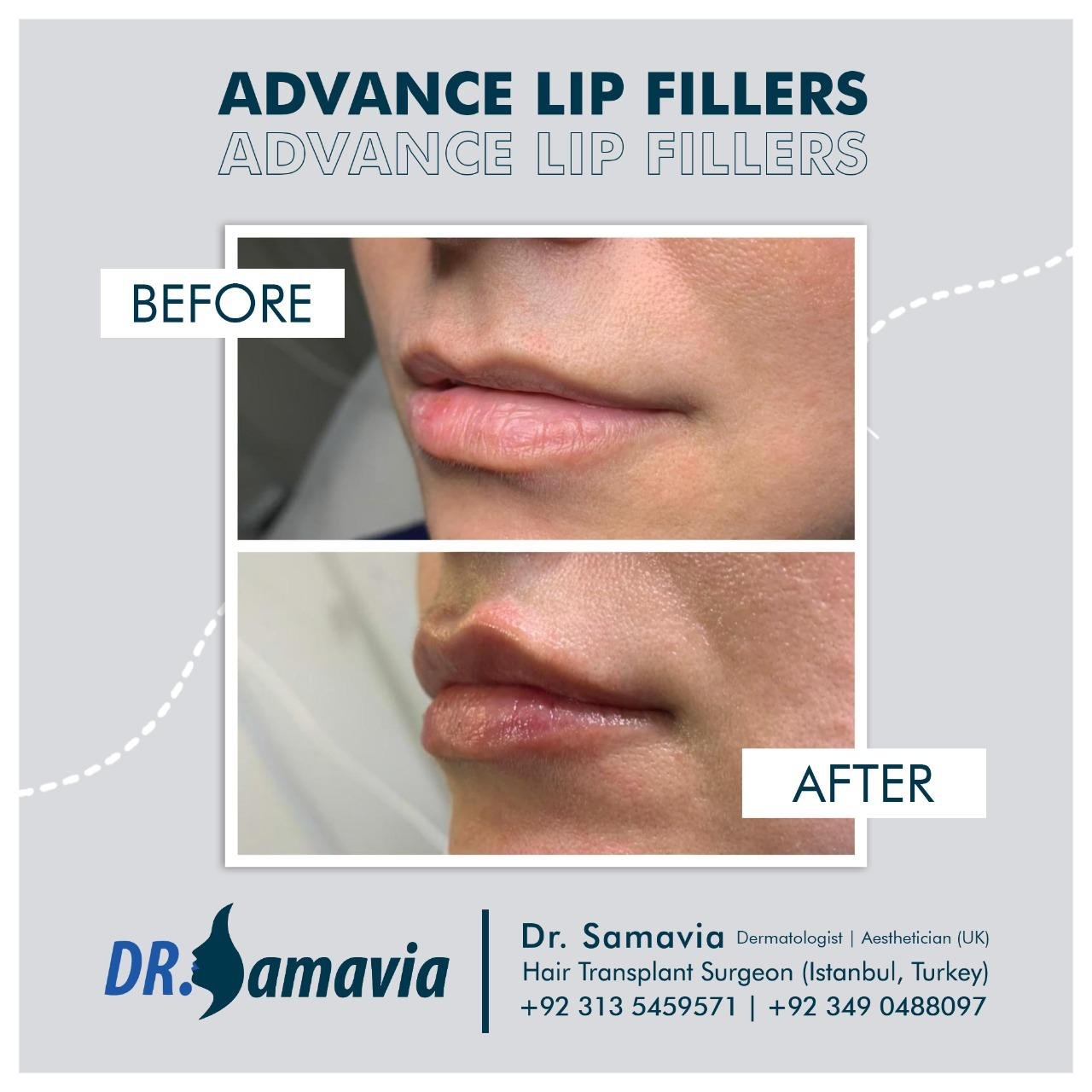
Thin or volume-deficient lips
Lip fillers can increase volume or modify lip shape in appropriate patients.
Treatment should respect natural anatomy rather than simply injecting the largest possible volume.
Chin and facial proportions
Selected fillers may be used to improve chin projection or facial balance without surgery.
Facial folds
Fillers may soften certain folds, including nasolabial folds, when volume correction is appropriate.
Acne scars
Certain filler products may be used for selected depressed acne scars.
Not every type of acne scar is suitable for filler treatment.
Early facial ageing
Restoring carefully selected areas of volume loss may produce a more rested or balanced appearance without changing the patient's basic facial identity.
Potential benefits
Potential benefits of Dermal Fillers include:
- Minimally invasive treatment
- No traditional surgical incision
- Short treatment time
- Usually limited downtime
- Immediate or near-immediate results with many filler types
- Ability to restore selected areas of lost volume
- Can enhance facial proportions
- Treatment can be customised to individual anatomy
- Different products are available for different treatment goals
- Temporary fillers allow treatment plans to evolve as the face continues to age
A conservative approach often produces a more natural result than attempting substantial correction during a single appointment.
The final outcome depends considerably on product selection, injection depth, volume, anatomical knowledge and injector experience.
Limitations and realistic expectations
Dermal fillers do not permanently stop facial ageing.
Most fillers are temporary and are gradually absorbed or remodelled over time.
Fillers also cannot reliably:
- Remove substantial excess skin
- Provide the same correction as a surgical facelift
- Permanently prevent wrinkles
- Guarantee perfect symmetry
- Correct every facial concern
- Guarantee a particular duration
- Eliminate every deep wrinkle
- Permanently reshape facial anatomy with temporary products
More filler is not automatically better.
Excessive treatment may lead to:
- Overfilled appearance
- Distortion of natural facial proportions
- Visible or palpable product
- Puffiness
- Unnatural lip or cheek volume
Treatment should therefore be based on anatomy and desired correction rather than the number of syringes alone.
Different filler materials also have different reversibility.
Hyaluronic acid fillers can often be reduced or dissolved using hyaluronidase when clinically necessary, although treatment with hyaluronidase has its own risks and does not guarantee restoration of the exact pre-treatment appearance.
Permanent and some non-hyaluronic fillers may be substantially more difficult to remove.
Who may be suitable?
Dermal fillers may be considered for adults seeking improvement in:
- Facial volume loss
- Cheek contour
- Lip volume
- Chin projection
- Selected facial folds
- Certain wrinkles
- Selected scars
- Facial proportions
A consultation may assess:
- Facial structure
- Skin quality
- Existing volume
- Facial symmetry
- Dynamic facial movement
- Previous filler
- Previous facial surgery
- Previous thread treatments
- Medical conditions
- Medication
- Allergies
- Cosmetic expectations
The clinician should determine whether filler is actually the appropriate treatment.
For example, a patient whose main concern is muscle-related forehead lines may benefit more from botulinum toxin, while significant loose skin may require a different treatment entirely.
Who may not be suitable?
Dermal filler treatment may need to be postponed or avoided in patients with:
- Active infection at or near the injection site
- Inflamed skin
- Active significant acne in the treatment area
- Certain severe allergies
- Known allergy to the proposed filler or its components
- Certain bleeding disorders
- Significant uncontrolled medical illness
- Previous serious filler complication
- Unrealistic expectations
Extra assessment is appropriate for patients with:
- Autoimmune or inflammatory conditions
- History of severe allergic reactions
- Previous permanent fillers
- Previous facial implants
- Significant abnormal scarring
- Recent infection or illness
Safety during pregnancy and breastfeeding has not been adequately established for many dermal filler products, so elective treatment is generally approached cautiously.
Patients taking anticoagulants or medicines that affect bleeding should discuss these with the treating clinician.
Do not stop a prescribed medication without advice from the clinician who prescribed it.
How to prepare
Before Dermal Filler treatment, tell your clinician about:
- Prescription medicines
- Blood-thinning medication
- Aspirin or anti-inflammatory medication
- Vitamins and supplements
- Allergies
- Previous dermal fillers
- Type and location of previous fillers
- Previous botulinum toxin
- Thread lifts
- Facial surgery
- Dental procedures
- Recent infection or illness
- History of cold sores
- Previous allergic reactions
- Pregnancy or breastfeeding
- Medical conditions
Your clinician should tell you:
- The exact filler being used
- Manufacturer
- Filler material
- Treatment area
- Expected duration
- Potential complications
- Whether the proposed use is approved or off-label in the relevant jurisdiction
Recent dental work, infections, vaccinations or illnesses should also be disclosed because inflammatory reactions around existing filler have occasionally been reported following immune-system stimulation.
How the procedure works
1. Facial assessment
The face is evaluated at rest and during movement to identify areas of volume loss, asymmetry and structural support.
2. Treatment planning
The clinician selects the appropriate filler, quantity and injection locations.
3. Skin preparation
Makeup and surface contaminants are removed and the skin is disinfected.
4. Pain control
Depending on the procedure, comfort measures may include:
- Topical anaesthetic
- Local anaesthetic
- Ice or cooling
- Lidocaine already incorporated into the filler product
5. Filler injection
The filler is carefully introduced using a needle or cannula depending on the treatment plan.
Small amounts may be placed at different depths according to anatomy and the characteristics of the selected product.
6. Assessment during treatment
Volume, symmetry and facial contour are reassessed as treatment progresses.
7. Completion
The treatment area is checked for swelling, bleeding, skin-colour changes or other immediate concerns.
8. Aftercare
The patient receives treatment-specific instructions and information about warning signs requiring urgent assessment.
Needle-free or high-pressure filler pens should not be used as an alternative to properly administered injectable fillers.
Results and treatment timeline
The timing of results depends on the filler material.
Immediately after treatment
Many fillers, particularly hyaluronic acid gels, produce immediate or near-immediate volume change.
However, the initial result can be temporarily affected by:
- Swelling
- Redness
- Bruising
- Local anaesthetic
- Minor tissue irritation
First several days
Swelling usually begins to settle and facial contours become easier to assess.
Lips can sometimes swell more noticeably than other treatment areas.
Around 1 to 2 weeks
Many minor injection-related effects have improved, allowing a more useful assessment of the result.
The American Academy of Dermatology notes that redness, swelling, tenderness and occasional bruising generally resolve within approximately 7 to 14 days or sooner.
Collagen-stimulating fillers
Products such as poly-L-lactic acid produce more gradual improvement as tissue response develops.
Multiple treatments may sometimes be planned.
Longer term
The body gradually breaks down most temporary filler products.
General ranges described by the American Academy of Dermatology include:
- Hyaluronic acid: often approximately 4 to 12 months
- Calcium hydroxylapatite: approximately 6 months to 1 year
- Poly-L-lactic acid: approximately 1 to 3 years
These are broad estimates rather than guarantees.
Duration depends on the exact product, amount, anatomical location, metabolism and individual patient.
Risks and side effects
Dermal filler injection is a medical procedure.
Common temporary effects can include:
- Redness
- Swelling
- Bruising
- Tenderness
- Pain
- Itching
- Temporary firmness
Other possible complications include:
- Infection
- Asymmetry
- Under-correction
- Over-correction
- Lumps or nodules
- Granulomas
- Persistent swelling
- Delayed inflammatory reactions
- Allergic reaction
- Filler migration
- Skin irregularity
- Persistent discolouration
Vascular Occlusion
The most important uncommon complication is accidental placement of filler into, or compression of, a blood vessel.
This can reduce or block blood supply.
Depending on the vessel involved, consequences can include:
- Severe pain
- Skin blanching or abnormal colour
- Skin injury
- Tissue necrosis
- Scarring
Very rarely, filler entering or obstructing blood vessels connected with the eye or brain has been associated with:
- Vision disturbance
- Permanent blindness
- Stroke
These complications are uncommon but can be severe and permanent.
Unusual severe pain, white/grey/blue skin, sudden visual changes or neurological symptoms during or after filler treatment require urgent medical assessment.
The clinic performing filler treatment should have a clear protocol for identifying and responding to vascular complications.
Recovery and aftercare
Most patients can return to normal light daily activities shortly after treatment.
Temporary swelling or bruising can occur.
Depending on the product and treatment area, patients may be advised to:
- Avoid unnecessarily touching or rubbing injection sites.
- Avoid strenuous exercise for approximately 24 to 48 hours when advised.
- Avoid excessive heat or sauna temporarily.
- Avoid unnecessary pressure over treated areas.
- Follow instructions regarding makeup and skincare.
- Avoid manipulating or attempting to reshape filler themselves.
- Follow treatment-specific advice regarding dental procedures or other facial treatments.
Cold packs may sometimes be used to reduce swelling when recommended.
Do not aggressively massage the filler unless specifically instructed by the treating clinician.
Contact the clinic if you experience:
- Increasing pain
- Severe swelling
- Significant redness
- Pus or discharge
- Fever
- Persistent lumps
- Unusual skin colour changes
- Blistering
- Another unexpected reaction
Seek urgent medical attention for vision changes, unusual severe pain, white/grey/blue discolouration of the skin, facial weakness, difficulty speaking or other stroke-like symptoms.
Alternatives and comparisons
The most appropriate alternative depends on what the patient is trying to correct.
Options may include:
- No treatment
- Botulinum toxin
- Skin boosters
- Biostimulatory treatments
- Microneedling
- Chemical peels
- Laser resurfacing
- Energy-based skin tightening
- Thread lift
- Fat transfer
- Facial implants
- Surgical facelift or other facial surgery
Dermal Fillers vs Botox
Dermal fillers primarily add or restore volume.
Botox or other botulinum toxins temporarily reduce activity in selected facial muscles.
For example, dynamic frown lines may respond better to botulinum toxin, while cheek volume loss may be better suited to filler.
One treatment does not replace the other.
Dermal Fillers vs Skin Boosters
Dermal fillers are generally used to restore or modify structural volume and contour.
Skin boosters are generally placed more superficially with the aim of improving hydration or skin quality rather than producing substantial facial projection.
The exact distinction depends on the product being used.
Dermal Fillers vs Thread Lift
Fillers restore or modify volume.
Thread lifts use implanted threads to mechanically reposition mildly lax tissue.
Patients with volume loss and patients with tissue descent therefore may require different treatment strategies.
Dermal Fillers vs Fat Transfer
Dermal fillers use manufactured injectable materials.
Fat transfer removes fat from another part of the patient's body and injects processed fat into selected areas.
Fat transfer involves a more invasive procedure and has different recovery, risks and longevity.
Dermal Fillers vs Facelift
Fillers cannot remove significant excess skin or provide the same structural repositioning as facelift surgery.
Patients with substantial jowling, facial descent or loose neck skin may benefit more from surgical assessment.
The most appropriate alternative depends on what the patient is trying to correct.
Options may include:
- No treatment
- Botulinum toxin
- Skin boosters
- Biostimulatory treatments
- Microneedling
- Chemical peels
- Laser resurfacing
- Energy-based skin tightening
- Thread lift
- Fat transfer
- Facial implants
- Surgical facelift or other facial surgery
Dermal Fillers vs Botox
Dermal fillers primarily add or restore volume.
Botox or other botulinum toxins temporarily reduce activity in selected facial muscles.
For example, dynamic frown lines may respond better to botulinum toxin, while cheek volume loss may be better suited to filler.
One treatment does not replace the other.
Dermal Fillers vs Skin Boosters
Dermal fillers are generally used to restore or modify structural volume and contour.
Skin boosters are generally placed more superficially with the aim of improving hydration or skin quality rather than producing substantial facial projection.
The exact distinction depends on the product being used.
Dermal Fillers vs Thread Lift
Fillers restore or modify volume.
Thread lifts use implanted threads to mechanically reposition mildly lax tissue.
Patients with volume loss and patients with tissue descent therefore may require different treatment strategies.
Dermal Fillers vs Fat Transfer
Dermal fillers use manufactured injectable materials.
Fat transfer removes fat from another part of the patient's body and injects processed fat into selected areas.
Fat transfer involves a more invasive procedure and has different recovery, risks and longevity.
Dermal Fillers vs Facelift
Fillers cannot remove significant excess skin or provide the same structural repositioning as facelift surgery.
Patients with substantial jowling, facial descent or loose neck skin may benefit more from surgical assessment.
What affects the cost?
The cost of Dermal Fillers can depend on:
- Filler brand
- Filler material
- Amount of product required
- Number of syringes
- Treatment area
- Complexity of the correction
- Previous filler
- Facial anatomy
- Practitioner expertise
- Whether multiple areas are treated
- Follow-up requirements
Treatment should not simply be based on purchasing a predetermined number of millilitres.
A smaller amount strategically placed according to anatomy can sometimes produce a more appropriate result than excessive filling.
Price comparisons should also consider the exact product being injected, because different filler materials and brands cannot necessarily be compared solely by syringe volume.
Patient experiences
Reviews describe individual experiences and do not predict another patient's result.
I had a wonderful experience consulting with Dr. Samaviya Ejaz. She is an incredibly impressive and professional dermatologist. Her clinic is beautiful and has a calming atmosphere.
Umar Shah
Read on GoogleI had my hair fall consultation with Dr Samavia. She thoroughly explained the treatment. After PRF sessions my hair fall stopped and density improved. Highly recommend.
Moneeb Mumtaz
Read on GoogleI have had a few treatments at this clinic and I am happy with the outcomes. Dr. Samavia and her team are kind, professional, and trustworthy.
Sheikh Yousuf Kareem
Read on GoogleVisit Dr Samavia at Facetime Clinic
Use the verified Google profile for clinic directions, business details and linked patient reviews.
Clinical references
- Dermal Fillers (Soft Tissue Fillers)U.S. Food and Drug Administration · accessed 29 August 2026
- Fillers: OverviewAmerican Academy of Dermatology · · accessed 29 August 2026
- Fillers: Frequently Asked QuestionsAmerican Academy of Dermatology · accessed 29 August 2026
- Fillers: PreparationAmerican Academy of Dermatology · accessed 29 August 2026
- Dermal Fillers: Risks and SafetyAmerican Society of Plastic Surgeons · accessed 29 August 2026
- Dermal Fillers: Recovery and ResultsAmerican Society of Plastic Surgeons · accessed 29 August 2026
Dermal Fillers FAQs
How long do Dermal Fillers last?
The duration depends on the product, treatment area and patient. Hyaluronic acid fillers commonly last for several months, while some other fillers or collagen-stimulating products can last considerably longer. No precise duration can be guaranteed because metabolism, facial movement and filler characteristics differ between patients.
When will I see results after Dermal Fillers?
Many hyaluronic acid and other volumising fillers produce immediate or near-immediate improvement. However, temporary swelling can affect the initial appearance. A clearer assessment is generally possible after swelling and bruising settle. Some collagen-stimulating fillers develop their effect gradually over several weeks.
Are Dermal Fillers permanent?
Most commonly used dermal fillers are temporary and are gradually absorbed or remodelled by the body. Some longer-lasting and permanent filler materials exist, but they have different indications and can be much more difficult to remove if complications or dissatisfaction occur.
What is the difference between Botox and Dermal Fillers?
Botox temporarily reduces activity in selected facial muscles and is mainly used for dynamic expression lines. Dermal fillers add or restore volume and are used for concerns such as cheek volume loss, lip enhancement, chin contour or selected facial folds. The appropriate treatment depends on the cause of the concern.
Can Dermal Fillers be dissolved?
Hyaluronic acid fillers can often be broken down using an enzyme called hyaluronidase when clinically appropriate. Other filler materials cannot necessarily be dissolved in the same way, and permanent fillers may be very difficult to remove. Patients should therefore know exactly what product is being injected before treatment.
Other Botox & Fillers guides
Book a consultation in Islamabad to review suitability, alternatives, expected recovery and individual risks.