
Lip Fillers in Islamabad
Lip fillers are injectable treatments used to increase lip volume, improve definition, enhance shape, correct selected asymmetries and restore fullness that may decrease with age. Most modern lip fillers use hyaluronic acid (HA), a temporary gel that attracts water and adds volume to the treated tissues. Lip filler treatment should be tailored to the patient's natural lip anatomy, facial proportions and desired result. The aim may range from subtle definition to increased volume, but treatment should preserve natural proportions rather than simply injecting the maximum possible amount of filler.
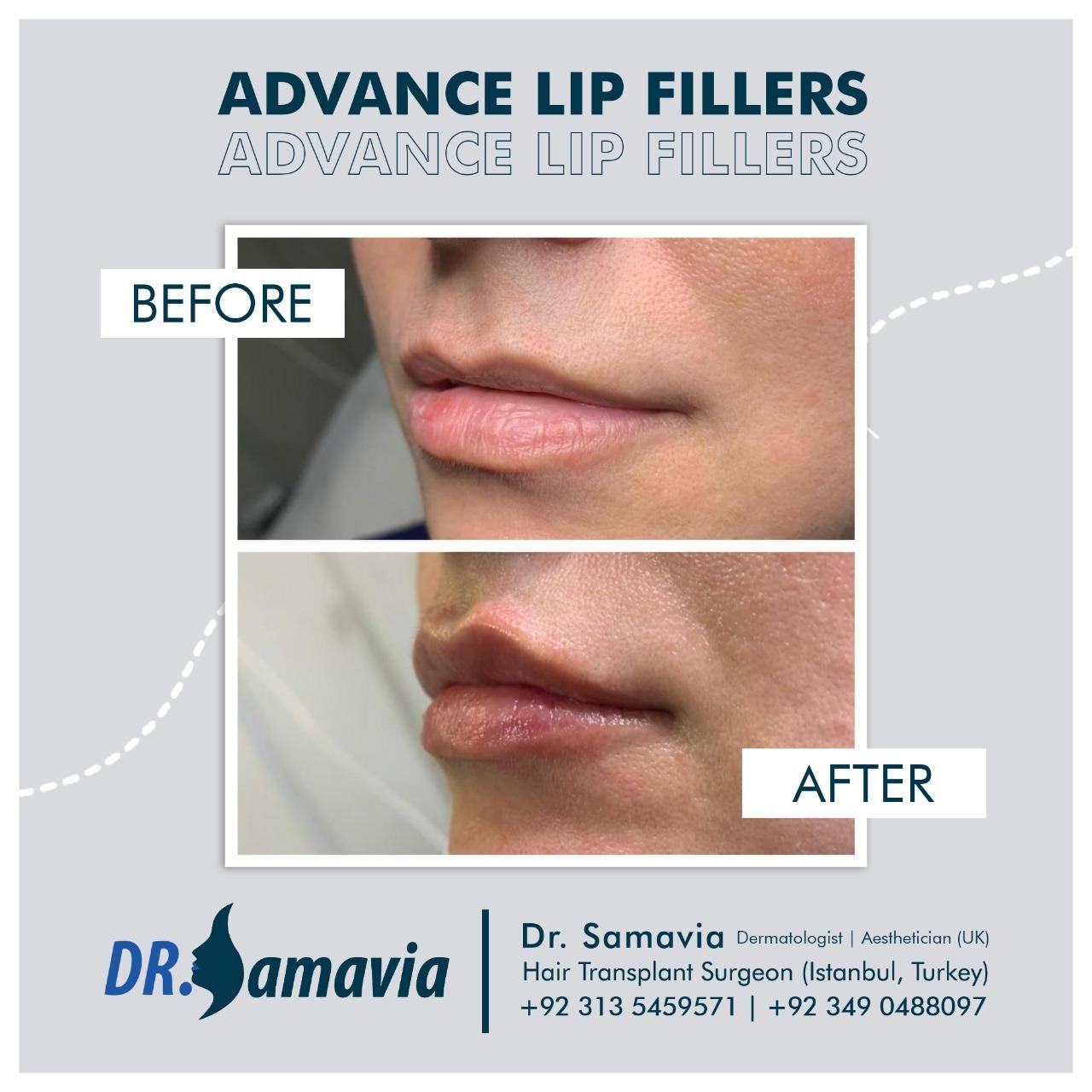
What is Lip Fillers?
Lip Fillers are injectable dermal fillers placed into selected areas of the lips or surrounding tissues to increase volume, improve shape or modify lip definition.
Hyaluronic acid is the material most commonly associated with modern temporary lip augmentation.
Hyaluronic acid is naturally present in human tissues and has the ability to bind water. In manufactured injectable fillers, HA is formulated into gels with different characteristics such as firmness, flexibility and degree of tissue integration.
Different fillers may therefore be selected depending on whether the treatment goal is:
- Lip volume
- Lip-border definition
- Structural support
- Subtle hydration and fullness
- Cupid's bow enhancement
- Correction of selected asymmetry
Not every dermal filler is appropriate for injection into the lips. The exact product and its approved indications should be considered before treatment.
The U.S. FDA has approved certain absorbable dermal fillers for lip augmentation in adults, but approval applies to specific products and indications rather than every filler available internationally.
What Are Lip Fillers Used For?
Lip fillers may be considered for patients seeking improvement in:
- Naturally thin lips
- Age-related loss of lip volume
- Reduced lip definition
- Mild lip asymmetry
- Cupid's bow definition
- Lip-border definition
- Upper or lower lip proportion
- Selected perioral contour concerns
Treatment may involve both the upper and lower lips or only selected areas.
A good treatment plan considers the lips in relation to:
- Chin
- Nose
- Teeth
- Smile
- Lower face
- Overall facial proportions
Increasing lip volume without considering these relationships can create an unnatural appearance.
What concerns can it address?
Thin lips
Hyaluronic acid filler can increase lip volume in selected patients who naturally have thin lips or who have lost fullness over time.
Reduced lip definition
Careful placement may improve definition of the vermilion border and selected features such as the Cupid's bow.
Lip asymmetry
Some natural or acquired differences between the two sides of the lips may be improved with carefully planned filler placement.
Perfect symmetry cannot be guaranteed because natural facial asymmetry is normal.
Age-related lip changes
Ageing can cause:
- Reduced lip volume
- Flattening of the Cupid's bow
- Reduced lip definition
- Lengthening of the upper-lip area
- Development of lines around the mouth
Fillers may improve some volume-related changes but cannot correct every age-related structural change.
Lip shape and proportion
Filler can sometimes modify projection or the relationship between the upper and lower lip.
The goal should generally be proportionate enhancement rather than extreme enlargement.
Potential benefits
Potential benefits of Lip Fillers include:
- Minimally invasive treatment
- No surgical incision
- Short treatment time
- Immediate visible volume
- Customisable degree of enhancement
- Can improve lip definition
- Can restore selected age-related volume loss
- Can improve certain mild asymmetries
- Temporary HA products allow future treatment plans to change
- Hyaluronic acid fillers can often be reduced using hyaluronidase if clinically necessary
A conservative approach generally allows better control of lip proportions.
The American Academy of Dermatology specifically advises against overfilling and notes that conservative treatment tends to produce more natural-looking results.
Limitations and realistic expectations
Limitations and realistic expectations
Lip Fillers are not permanent when temporary hyaluronic acid products are used.
They also cannot guarantee:
- Perfect symmetry
- A specific celebrity lip shape
- Completely scar-free or bruise-free treatment
- A precise duration
- No swelling
- Permanent correction
- A natural result if excessive product is used
Individual anatomy determines how much change can be achieved safely and naturally.
Extremely thin lips should generally not be transformed into dramatically larger lips in one session.
Overfilling can produce:
- Excessive projection
- Poor upper-to-lower-lip proportions
- Visible filler
- Migration
- Puffiness
- An unnatural appearance
Swelling immediately after treatment can also make the lips appear larger than the eventual result.
Additional filler should therefore not normally be judged solely on the appearance during the first few days.
Who may be suitable?
Limitations and realistic expectations
Lip Fillers are not permanent when temporary hyaluronic acid products are used.
They also cannot guarantee:
- Perfect symmetry
- A specific celebrity lip shape
- Completely scar-free or bruise-free treatment
- A precise duration
- No swelling
- Permanent correction
- A natural result if excessive product is used
Individual anatomy determines how much change can be achieved safely and naturally.
Extremely thin lips should generally not be transformed into dramatically larger lips in one session.
Overfilling can produce:
- Excessive projection
- Poor upper-to-lower-lip proportions
- Visible filler
- Migration
- Puffiness
- An unnatural appearance
Swelling immediately after treatment can also make the lips appear larger than the eventual result.
Additional filler should therefore not normally be judged solely on the appearance during the first few days.
Who may not be suitable?
Lip filler treatment may need to be postponed or avoided in patients with:
- Active infection around the lips
- Active cold sores
- Significant inflammation
- Known allergy to the proposed filler
- Allergy to lidocaine where relevant
- Certain bleeding disorders
- Significant uncontrolled medical illness
- Previous serious filler complications
- Significant unexplained lip swelling
- Unrealistic expectations
The FDA advises delaying filler treatment where active skin inflammation or infection is present.
Additional assessment may be required for patients with:
- History of severe allergies or anaphylaxis
- Autoimmune or inflammatory conditions
- Previous permanent lip fillers
- Previous lip implants
- Significant scar formation
- Recent illness
- Recent dental procedures
Safety during pregnancy and breastfeeding has not been adequately established for many filler products, so elective treatment is generally avoided or postponed.
How to prepare
Before Lip Filler treatment, tell your clinician about:
- Prescription medicines
- Aspirin
- Anticoagulants
- Anti-inflammatory medicines
- Vitamins and supplements
- Allergies
- History of cold sores
- Previous dermal fillers
- Previous filler complications
- Previous lip surgery
- Dental treatment
- Recent infection or illness
- Previous hyaluronidase treatment
- Pregnancy or breastfeeding
- Medical conditions
Patients with recurrent herpes simplex or cold sores should mention this before treatment because lip injections can sometimes trigger recurrence.
Your clinician should tell you:
- Which filler will be injected
- What the product contains
- How much is planned
- Whether the product is temporary
- Expected results
- Expected swelling
- Potential complications
Do not stop prescribed anticoagulants or other medicines without advice from the clinician who prescribed them.
How the procedure works
1. Lip and facial assessment
The lips are assessed at rest and during smiling or speaking.
2. Treatment planning
The clinician determines whether treatment will focus on:
- Volume
- Border definition
- Cupid's bow
- Projection
- Symmetry
- Several features together
3. Skin preparation
The lips and surrounding skin are cleaned and disinfected.
4. Pain control
Comfort measures may include:
- Topical numbing cream
- Local anaesthesia
- Cooling
- Lidocaine contained within the filler
5. Filler injection
Small amounts of filler are placed at selected points using a fine needle or cannula depending on the treatment plan.
The clinician may repeatedly reassess:
- Lip shape
- Volume
- Projection
- Symmetry
6. Final assessment
The lips are examined for swelling, bleeding, skin-colour changes and overall appearance.
7. Aftercare
The patient receives instructions about swelling, touching the area, exercise and warning symptoms.
Needle-free or high-pressure “hyaluron pens” should not be used to inject lip fillers. The FDA has warned that needle-free filler devices do not provide adequate control over product placement and have been associated with serious injuries.
Results and treatment timeline
Lip fillers generally produce immediate volume change.
However, the appearance immediately after treatment is not the final result.
Immediately after treatment
The lips may appear:
- Fuller than expected
- Swollen
- Slightly uneven
- Red
- Tender
Small injection marks can also be visible.
First 24 to 72 hours
Swelling is often most noticeable during the early recovery period.
Bruising may develop.
One area may temporarily swell more than another, creating short-term asymmetry.
Around 1 week
Swelling generally continues to improve and the lip shape becomes easier to assess.
Around 1 to 2 weeks
Most treatment-related swelling and bruising has substantially settled in many patients, allowing a more meaningful assessment.
Longer term
Hyaluronic acid filler is gradually broken down by the body.
The American Academy of Dermatology gives a broad duration of approximately 4 to 12 months for hyaluronic acid fillers, although the exact duration depends on the product and treatment location.
Repeat treatment may be considered when the effect decreases.
Risks and side effects
Common temporary effects include:
- Swelling
- Tenderness
- Bruising
- Redness
- Pain
- Itching
- Temporary firmness
- Mild temporary asymmetry
Other possible complications include:
- Infection
- Cold-sore reactivation
- Persistent swelling
- Lumps
- Nodules
- Granulomas
- Filler migration
- Uneven appearance
- Overfilling
- Allergic reaction
- Delayed inflammatory reaction
- Unsatisfactory cosmetic result
Vascular Occlusion
The most important uncommon complication is vascular occlusion.
This occurs when filler is accidentally injected into or interferes with blood flow through a blood vessel.
Possible warning signs include:
- Severe or increasing pain
- Unusual blanching or whitening
- Grey, blue or mottled skin colour
- Cool skin
- Unexpected worsening pain after treatment
Reduced blood flow can cause tissue damage and skin necrosis if not recognised and treated promptly.
The FDA states that accidental filler injection into blood vessels is the most concerning dermal-filler risk. Although uncommon, reported complications include tissue necrosis, vision abnormalities including blindness, and stroke.
Sudden visual symptoms, severe unusual pain or neurological symptoms during or following filler treatment require urgent medical assessment.
Recovery and aftercare
Most patients can return to normal light activities after treatment.
Swelling and tenderness should be expected rather than treated as evidence that the final result is too large.
Your clinician may advise you to:
- Avoid rubbing or pressing the lips.
- Avoid attempting to reshape the filler yourself.
- Avoid strenuous exercise temporarily.
- Avoid excessive heat or sauna for a short period.
- Avoid unnecessary alcohol if advised because it may worsen bruising.
- Use a cold compress when recommended.
- Follow instructions regarding makeup and skincare.
- Keep the area clean.
- Avoid additional cosmetic procedures until the lips have settled.
Do not aggressively massage filler unless specifically instructed.
Contact the clinic for:
- Increasing pain
- Significant persistent swelling
- Spreading redness
- Pus or discharge
- Fever
- Persistent hard lumps
- Significant asymmetry after swelling settles
- Another unexpected reaction
Seek urgent medical attention for:
- Severe or increasing unusual pain
- White, grey or blue skin
- Sudden visual changes
- Loss of vision
- Facial weakness
- Difficulty speaking
- Other neurological symptoms
Alternatives and comparisons
The appropriate alternative depends on the patient's goal.
Options may include:
- No treatment
- Lip skincare and hydration
- Botulinum toxin lip flip
- Other appropriate facial fillers
- Surgical lip procedures
- Treatment of perioral lines
- Facial-proportion assessment
Lip Fillers vs Lip Flip
Lip Fillers physically add volume using an injectable filler.
A lip flip uses botulinum toxin in selected muscles around the upper lip to temporarily alter lip position or show slightly more of the upper lip.
A lip flip does not add filler volume.
Lip Fillers vs Lip Augmentation Surgery
Lip filler is minimally invasive and generally temporary.
Surgical lip augmentation or other surgical techniques are more invasive and have different risks, recovery and durability.
Lip Fillers vs Skin Boosters
Lip fillers are usually intended to produce measurable volume or structural shaping.
Skin boosters are generally used more superficially for hydration and skin quality and are not automatically interchangeable with structural lip fillers.
What affects the cost?
The cost of Lip Fillers depends on factors including:
- Brand of filler
- Type of hyaluronic acid gel
- Amount of filler required
- Previous lip filler
- Desired degree of correction
- Lip anatomy
- Treatment complexity
- Practitioner expertise
- Follow-up requirements
Treatment should not automatically be based on injecting a full syringe.
The appropriate amount depends on natural anatomy and treatment goals.
Some patients require subtle correction, while others may benefit from staged treatment rather than a large amount of filler in one appointment.
Price comparisons should also identify the exact filler product rather than comparing only syringe volume.
Patient experiences
Reviews describe individual experiences and do not predict another patient's result.
I had a wonderful experience consulting with Dr. Samaviya Ejaz. She is an incredibly impressive and professional dermatologist. Her clinic is beautiful and has a calming atmosphere.
Umar Shah
Read on GoogleI had my hair fall consultation with Dr Samavia. She thoroughly explained the treatment. After PRF sessions my hair fall stopped and density improved. Highly recommend.
Moneeb Mumtaz
Read on GoogleI have had a few treatments at this clinic and I am happy with the outcomes. Dr. Samavia and her team are kind, professional, and trustworthy.
Sheikh Yousuf Kareem
Read on GoogleVisit Dr Samavia at Facetime Clinic
Use the verified Google profile for clinic directions, business details and linked patient reviews.
Clinical references
- Dermal Fillers (Soft Tissue Fillers)U.S. Food and Drug Administration · accessed 29 August 2026
- Dermal Filler Do's and Don'ts for Wrinkles, Lips and MoreU.S. Food and Drug Administration · accessed 29 August 2026
- FDA-Approved Dermal FillersU.S. Food and Drug Administration · accessed 29 August 2026
- Fillers: Frequently Asked QuestionsAmerican Academy of Dermatology · accessed 29 August 2026
- Fillers: OverviewAmerican Academy of Dermatology
- Dermal Fillers: Risks and SafetyAmerican Society of Plastic Surgeons
Lip Fillers FAQs
How long do Lip Fillers last?
Most lip fillers use temporary hyaluronic acid. HA fillers broadly last around 4 to 12 months, although duration varies according to the exact product, amount injected, lip movement and individual metabolism. Repeat treatment may be considered as the effect gradually decreases.
How long does swelling last after Lip Fillers?
Swelling is common during the first few days and can make the lips temporarily appear larger or uneven. It generally improves progressively, although bruising and residual swelling can sometimes take approximately one to two weeks to settle fully.
How much Lip Filler do I need?
There is no ideal quantity for every patient. The amount depends on natural lip size, shape, previous filler and desired result. A conservative or staged approach is often preferable to excessive treatment, particularly for naturally thin lips.
Can Lip Fillers be dissolved?
Most hyaluronic acid fillers can be broken down using an enzyme called hyaluronidase when clinically necessary. Hyaluronidase is itself a medical treatment with potential risks, and not every type of filler can be dissolved this way.
What is the difference between Lip Fillers and a Lip Flip?
Lip fillers add physical volume using an injectable gel. A lip flip uses botulinum toxin to temporarily relax selected muscles around the upper lip, which can make slightly more of the lip visible without adding actual volume. The procedures therefore address different concerns.
Other Botox & Fillers guides
Book a consultation in Islamabad to review suitability, alternatives, expected recovery and individual risks.